Do you consider these approaches valid as ‘art’?
Art, like culture, society, nature, self, is a slippery term with multiple meanings. Art has a perennially contested, perennially shifting social meaning. Matisse’ breakthrough work was dismissed as ‘decoration’ rather than art by the French establishment, and the phenomenon of ‘outsider art’ shows how creative work overlooked in one era can become celebrated art in another. This being the case, all the photographic works in this presentation can be considered ‘art’ simply because establishment figures have considered them as such, often stressing the validity of the work as ‘art’ in financial terms.
However, and this is of much greater interest to me, art has a personal dimension, and I believe we each have our own subjective working definition of what art is – and perhaps just as important, what it isn’t, as seen by the ongoing popular antipathy to Tracy Emin’s bed. My working definition is a creative piece that is both intellectually and technically rigorous, whatever medium is being used (and this can include beds), and that has the ability not just to engage the viewer, but to involve them. Art might involve me in ways that I don’t enjoy – such as the work of Francis Bacon – or in ways that I do – such as the work of Georgia O’Keefe. Where something considered ‘art’ leaves me cold, as with the paintings of Rothko, I defer to a respect for technical proficiency and personal vision (more on that later). Where none of these apply, I will grudgingly go along with the fact that it’s ‘art’ because other people say it is. As, I’m afraid, with the work of Cindy Sherman (more on that later, too).
How important are the principles of photographic craft skills?
I think that depends on what you define as these skills. Art, for me, is the understanding and use of the medium to communicate. Eggleston’s understanding of dye, Adams’ understanding of chemistry, these are irrelevant if you’ve chosen to use the Polaroid as your camera, and yet Wim Wenders’ understanding of the limitations and possibilities of this mass-market device, never intended for artistic production, is arguably as skilful as either of these. And, anyway, are the craft skills the same as technical skills? Mise en scene is adopted from theatrical via cinema and yet crucial for much postmodern photography. I think the question should be ‘How important is the ability to match intention with image outcome?’ To that question, I would answer: essential.
How important is the idea of the photographer as subjective author?
While there are numerous critical positions on this, I am, again, answering personally as I think this is the most productive for my practice. For me, the idea is incredibly important, although it needs to be said adding ‘subjective’ to author is somewhat redundant – there could never be such a thing as ‘objective’ author, even were that author to be the author of the most empiricist of science reports. I look to photographers whose work I know will give me pleasure, educate me both technically and politically, and inspire my own work. I will be drawn to specific styles, themes and experiences; that their work carries their name as author’s helps me do this. In a world drowning in images, this is perhaps now more important than ever.
That said, I’m of course aware that there can never be any ‘sole’ author – every photographer is borrowing from their own experience of culture, and with photography in particular there are other agencies inherent in the image itself, whether of the camera, lens, film etc, or the articles which enter through the lens, signage, facial expressions, and agents beyond human culture. I am also aware that I will bring my own subjectivity to bear, that I will recreate the image myself each time afresh – there can never be an accurate reproduction where factors such as light, screen warmth, paper type, differences in eyesight, personal experience, and psychological cognition. Nevertheless, I will be drawn to a book of Stephen Shore’s photographs because through his authorship, all these factors are able to mix in a largely reliable way that will chime with what I wish to find.
Where do you position your own practice with regard to the ideas of postmodern photography?
I flirted with the postmodern as a writer, and spent considerable time exploring the postmodern novel. The postmodern has its potentials and its charms – but also its pitfalls. It lends itself to solipsism and needless difficulty. While claiming to embrace the popular and commonplace, much postmodern art – from literature to architecture to photography – needs explaining to be appreciated, and often feels like an intellectual and exclusive in-joke. If you don’t get the joke, it’s hard to appreciate on its own merits, and this is perhaps why it often falls flat outside of intellectual circles. I thought the film clip from Zoo (Salla Tykka, 2006) was awful, frankly: without notable aesthetic merit nor with anything particularly interesting to say for itself. At its best, the postmodern is joyfully playful: here the play was in deadly earnest. I feel similarly, though less strongly, about the work of Cindy Sherman. As for Richard Prince, my feelings are – yes, I see what you’re saying, very clever, but so what? Who cares?
Calling attention to artistic constructedness and the motives behind creation is nothing new – it’s traceable at least back to Don Quixote – but has been a prevalent force since Marcel DuChamp. Personally, I find it a spent force. Creative activity can be turned towards a great number of things, and self-referentiality feels to me an unnecessary weight. I believe it’s long been time to move on to other things. In short, in relation to my practice I don’t care about the postmodern – I’m simply not interested in those conversations any more.
Do we simply live in a world of recycled images?
Yes, of course we do. We live in a world of recycled everything. Surely nothing is more recycled than language – and yet we each find our own distinctive position in relation to it. We each of us use language and the power structures inherent in it in our own way. This is why I find Bakhtin’s theory of dialogism a more open, less cynical and ultimately more empowering account of the constructedness of culture.
Can we be original any more?
That surely depends on what one means by original. In Joel Sternfeld’s On This Site (1996) there’s a picture of a kitchen and on the fridge is a quote from Carl Sagan: If you wish to make an apple pie from scratch, you must first create the whole universe. In other words, the idea of true originality is a myth. It’s how we combine the elements we find that counts, even if the alterations we make to a pre-existing set of circumstances and materials are very subtle. One might also say that striving above all for originality is simply another expression of the worship of individualism. If that’s the case, it’s perhaps not such a great thing to strive for. I’d much rather get on with making the apple pie.
Sternfeld, J. 1996. On This Site. San Francisco: Chronicle Books.
Zoo [short film]. Dir. Tykka, S. Finland. 2006. 12 mins.







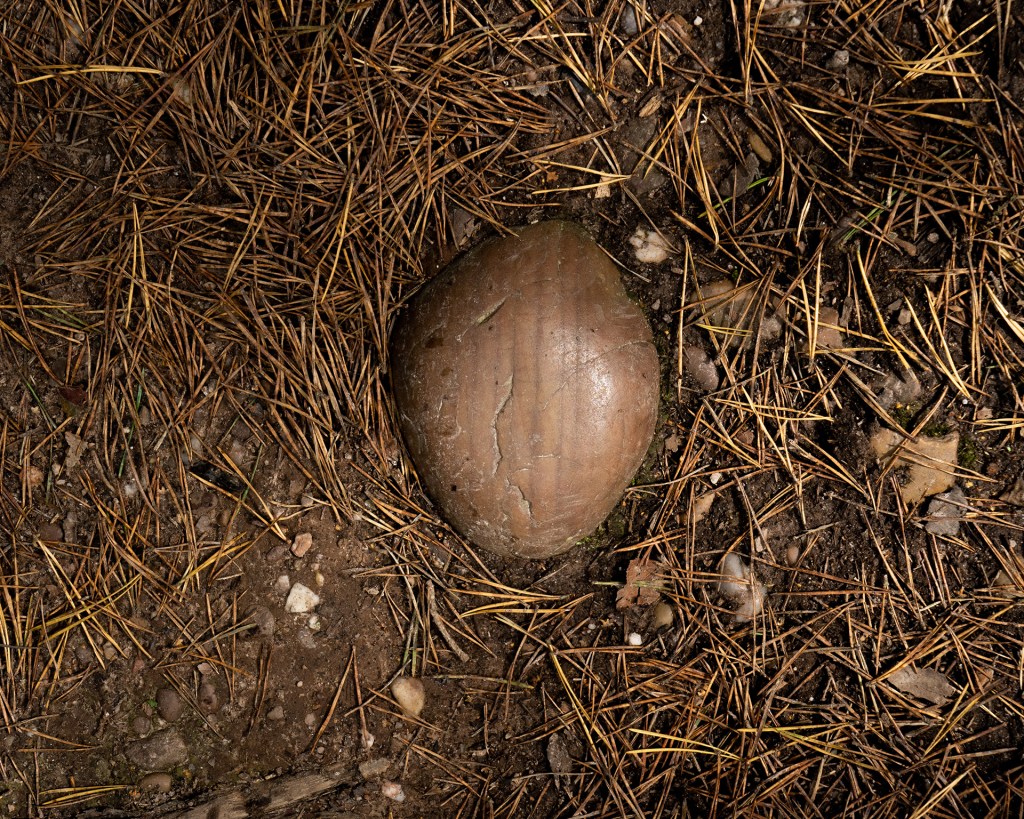
 out of the picture
You must be logged in to post a comment.