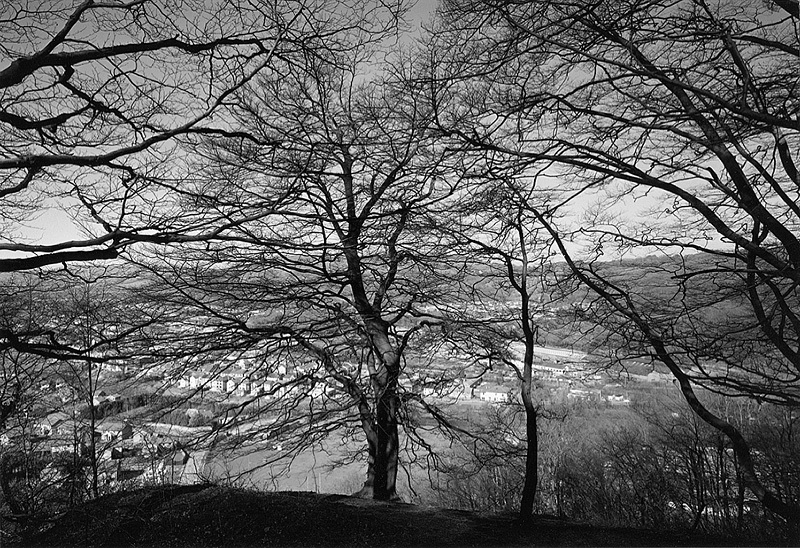
John Davies – A Green & Pleasant Land

Garth Woods, Taffs Well, 1996. Sourced from johndavies.uk.com

I’ve seen a couple of Davies’ images before, and have been keen to investigate further. There’s a studied melancholy but vitality to those I’ve seen, and his use of line and space and engagement with social and geographical history chime with my own interests. His work is deeply political inasmuch as it makes the viewer consider the politics embedded in the image, and is never didactic. It is critical of industry and power but nevertheless celebrates human endeavour and labour. He confronts nostalgia and the contradictions of a cultural love of the natural environment.
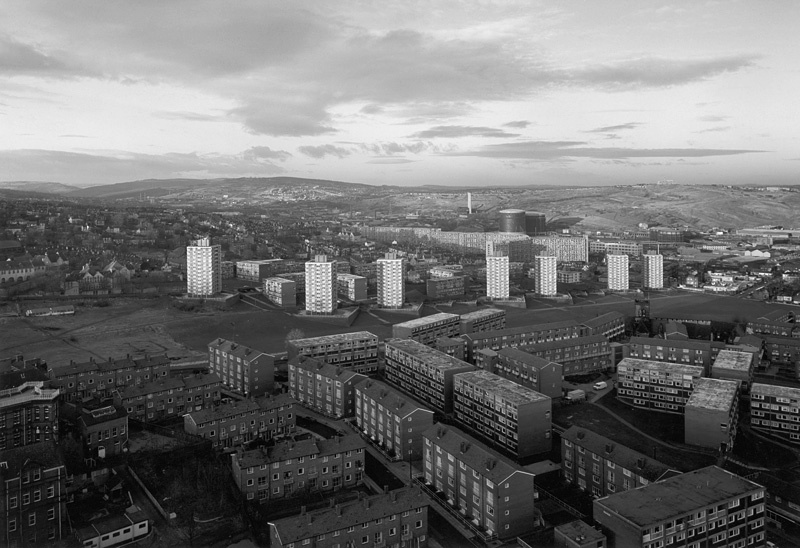
Looking through A Green & Pleasant Land (1987), I’m struck by the aesthetic as well as thematic interconnections. Largely shot, I imagine, large format, there’s a love of detail and an embrace of sky, even where it’s largely featureless. Sky is something I like but am anxious about in my own work, and which I began exploring as a part of an image this summer. Davies has typologies – bridges, brick, waterways, tall structures, railway and motorways, housing estate grids, recreational green space – that interconnect the photos, creating unity.
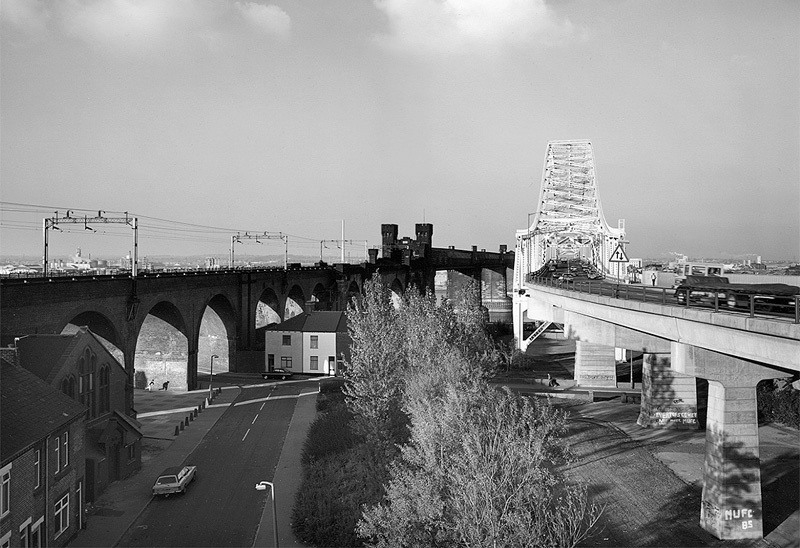
I’m willing to consider large format – eventually. Commons are often wide spaces and perhaps they are best depicted that way. I’m not sure about black and white – though I do enjoy it, and sometimes feel it’s the best match for a shot, I’m enjoying the colour available through my Sony, with the hyperreal touch it adds to my images in post-production. I think, however, that I’ll need to do further research and visit a lot more commons before I develop a typology. I’m getting there, though.
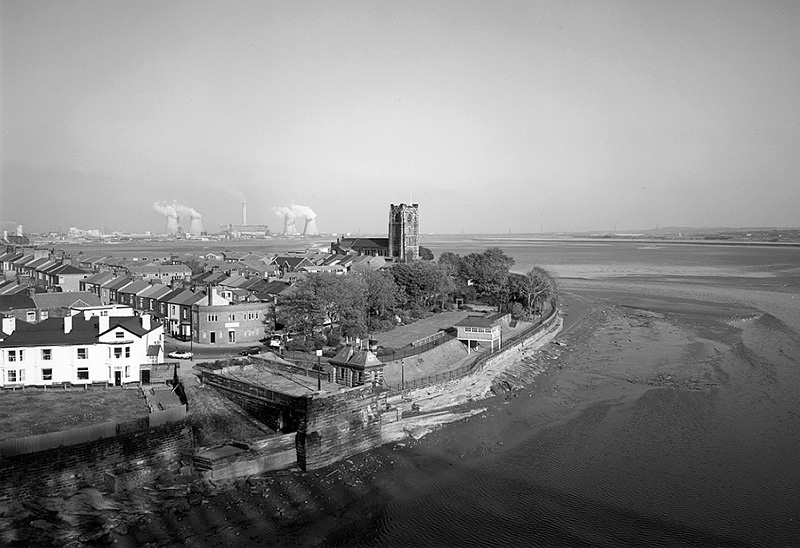
Davies, J., Wood, M., & Powell, R. 1987. A Green & Pleasant Land. Manchester: Cornerhouse Publications.
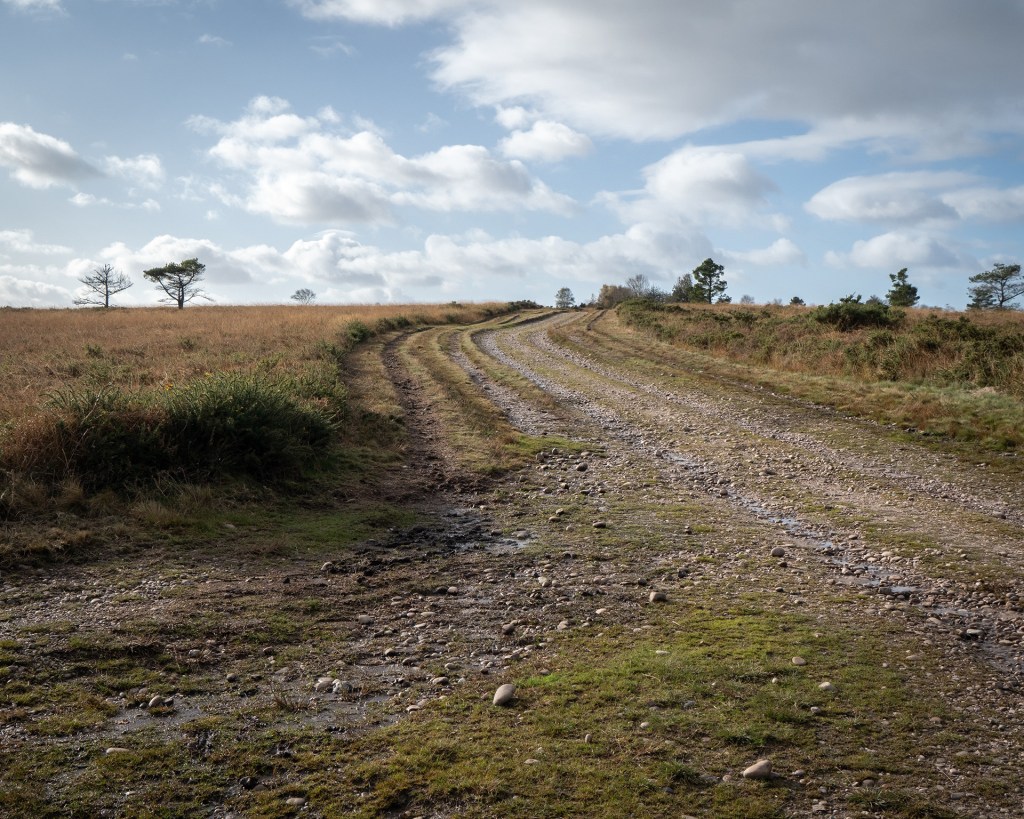
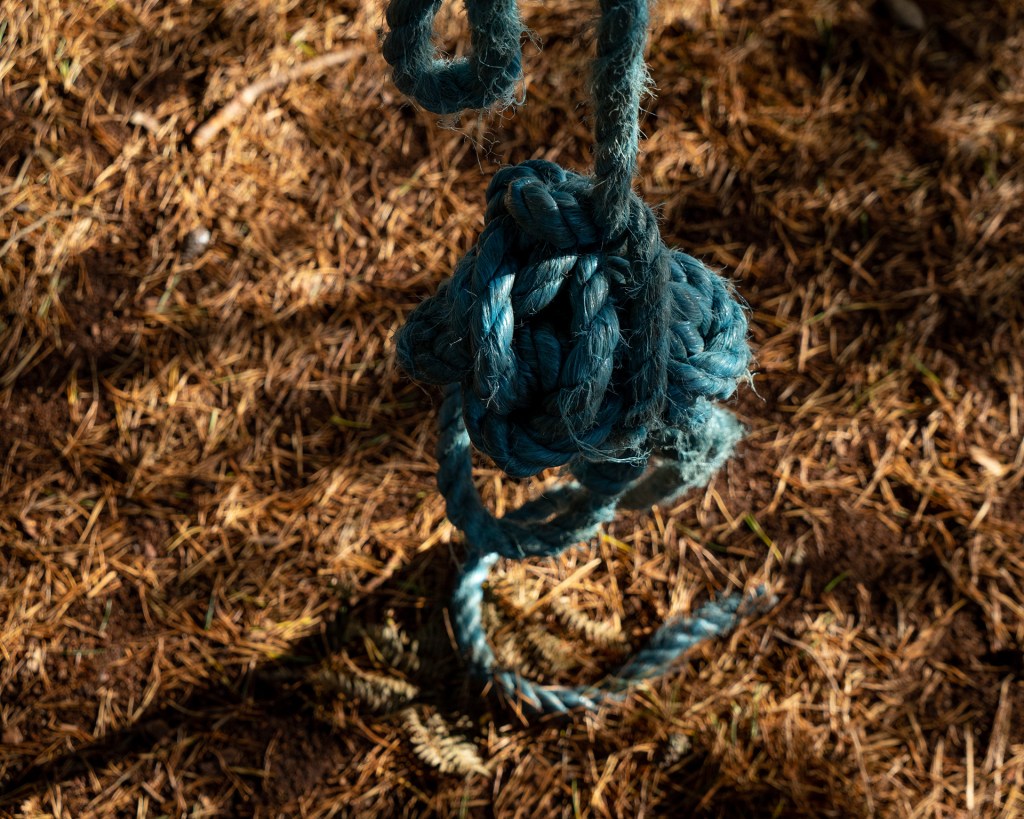
East Devon’s Pebblebed Commons – a first shoot

I’ve not yet got my head around including images with WordPress – all in good time – but I do want to use my CRJ to think things through.

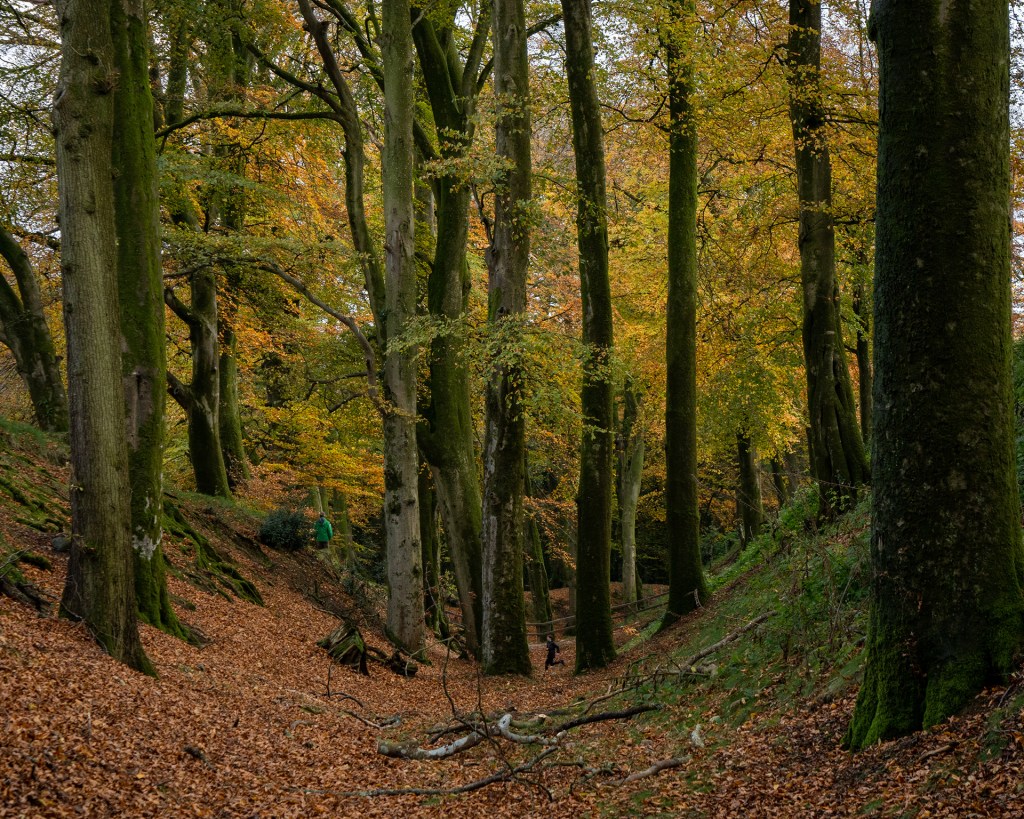
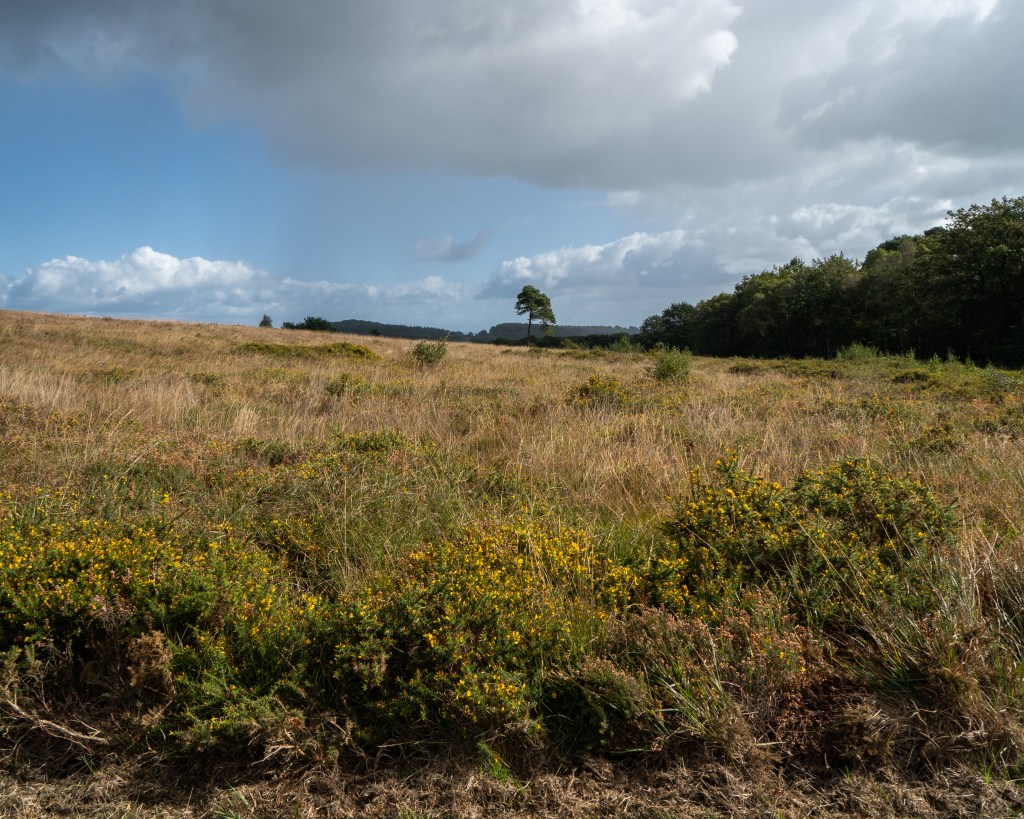
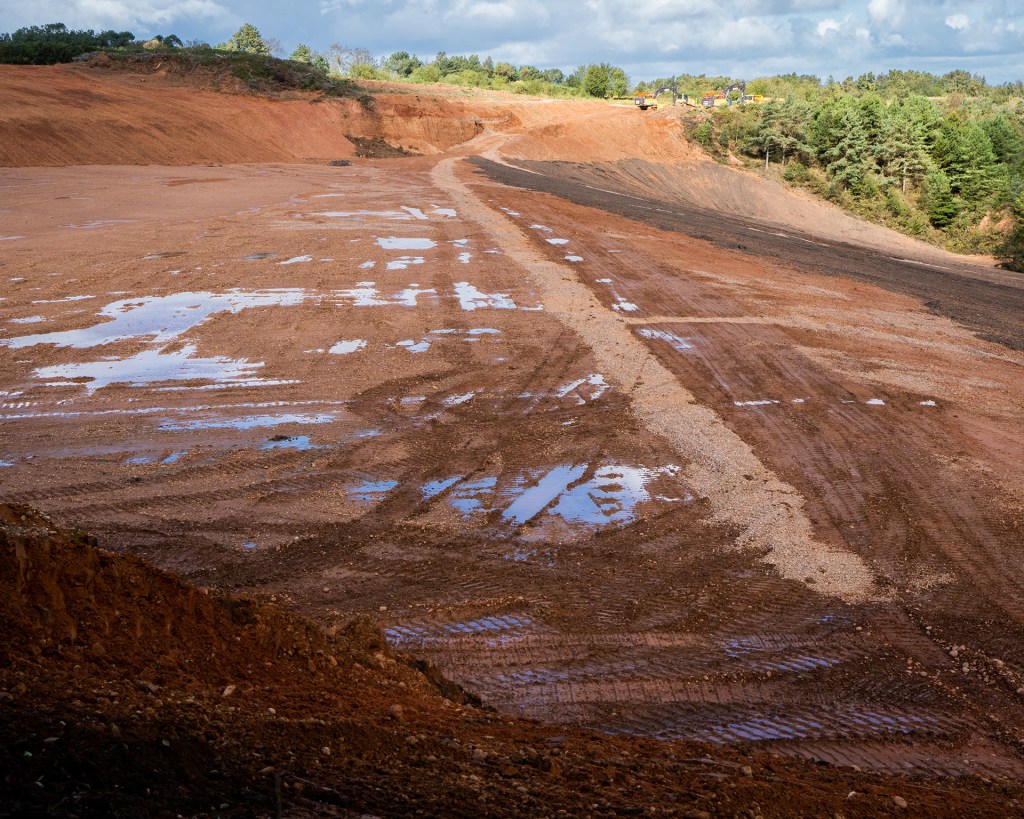
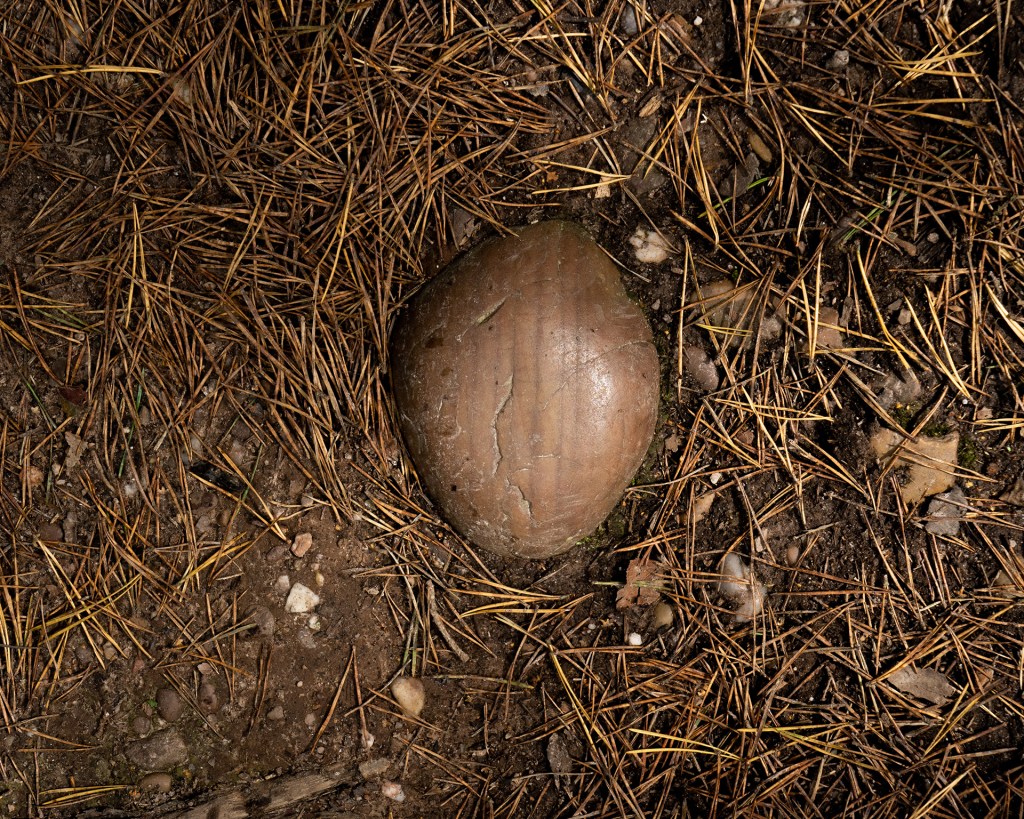
Yesterday, I did a walk of around 8 miles, linking up a fair few of the extraordinary collection of commons just north of Exmouth/ Budleigh Salterton. The area is an SSSI, and geologically interesting due to its characteristic pebbles – the remnants of a vast river delta that once covered this area. It’s also historically interesting that so many commons still exist in an area of agriculture and so close to relatively urban areas. The weather was glorious and the autumn colours just starting to emerge.

It was unlike any photo walk I’ve done before. I think this is due to it being connected with the MA. Rather, it was like the shoots I did for my film MA – it was a thinking through of ideas, using the camera as a form of thinking, and as a record of thinking. As with film, I became acutely interested in borders and permissions – something that defines commons, so perhaps inevitable. However, I now realise this has been a focus of my photography since that revelatory, frazzled walk with my Yashica in 1994, something that didn’t occur to me until now. Photography can be used as a way of decoding and considering signs – there certainly were plenty of them yesterday.

Personally, perhaps the central question of this MA is – who am I as a photographer, and what is it that I do? These questions were very much present. Being a rather awkward, self-doubting person, I struggle with photographing people. This presents a problem when photographing commons, because people are central to what commons are. They’re what makes a common a common, rather than just a collection of trees, an expanse of heather. To explore commons is to explore how people use the land. A way around this may be to follow one of my aesthetic traits – photographing the ground for the signs and tracks people leave behind – mountain bikes, dog prints, litter, car park potholes.

It’s just an idea, and chances are there are other activities that don’t leave much in the way of traces (such as model plane flying). But what it does make me wonder is whether I’ve been wrong in considering too narrow a view as to what ‘style’ means. I have several photographic strategies that have evolved over time. First is what I’ve just mentioned. Second are the wide angle, very geometric shots that look great with artificial structures, but also work with open spaces and footpaths. Third is my interest in signage – especially where a visual pun is possible. I think I can harness each of these to explore commons in different ways. How I weave them together into a coherent and unified style, and what other strategies I might add, is something to contemplate ongoingly.

Text and photos at the Martin Parr Foundation library

My first visit to the MPF library of 5000+ photobooks was a revelation. The staff were helpful, supportive, genuinely interested in my reason for visiting, and put some really key texts in front of me on the table. I was there for over two hours. Next time, it’ll be longer.

Simon Roberts’ We English (2009) explores the many ways that open space is used in the UK, from car boot sales to grouse hunting. He manages to work with both the micro and macro uses of space, and his full-frame images, with expansive skies or vast tracts of land taken from an elevated viewpoint, are ambitious and surprisingly tender. Ignoring the myriad practical reasons for not using this myself, it’s certainly one to have floating around in the background for big spaces as commons often are.

Susan Trangmar (2008) is a multi-media artist of long standing and her photobook A Play in Time uses stills from the AHRC-funded film that results from a year’s immersion in a Brighton path. These are sequenced chronologically and there’s a DVD of the film at the back of the book. The book also includes critical responses from 4 writers. The texts act as interludes.

Fay Godwin & Ted Hughes’ Remains of Elmet (1979) is another immersive text-photo fusion, Hughes’ poetry prompted by Godwin’s exploration of the Hebden Bridge/ Howarth area to record the last traces of their mills (and which includes a shot almost identical to one I took this summer). Writing and image work as a call and response.

Larry Sultan’s Pictures from Home (1992) shows Sultan to be as proficient a writer as a photographer. This is one to return to – it’s a photobook that needs to be read (although the photos themselves powerfully stand on their own merits). Text and image are interwoven and respond to one another, including both archival and project images. The writing is a memoir of family life. Exquisite

Aaron Schuman’s Slant (2019) is a quirky collection of American ephemera very much in the Walker Evans mould, interspersed with newspaper neighbourhood watch cuttings, some of which are laugh-out-loud funny. The joke does start to wane after a while, and there seems to be a lack of overall structure.

Paul Strand & Basil Davidon’s Tir A Mhurain (1962) is the result of a joint residency in Uist, each responding to investigations of people and place, tender and tough, high concept and deeply humane. Strand’s photographs range from documentary to landscape to abstract. Davidson’s text are typically factual, historically-based travel writing. Economic but poised. Images and text are like having two presenters complementing one another, focussed on the same subject, with a similar engagement, but very different forms of expression. Again, one to return to reading next time. The collaboration continued beyond this book.

Godwin, F., & Hughes, T. 1979. Remains of Elmet.  London: Rainbow Press.

Roberts, S. 2009. We English. London: Chris Boot. 

Schuman, A. 2019. Slant. London: Mack Books. 

Strand, P., & Davidson, B. 1962. Tir A Mhurain. London: MacGibbon & Kee.

Sultan, S. 1992. Pictures From Home. New York: Harry N. Abrams. 

Trangmar, S. 2008. A Play in Time. Brighton: Photoworks.

02.10.19

Who am I and what am I doing here? Questions that I’ve been asking myself ever since I can remember, but here, at least, there’s a specific context in which to ask them. This is my critical reflective journal (CRJ), created to accompany a Masters in Photography taken with Falmouth University. Arendt talked of thinking without a bannister in circumstances where there’s nothing to hold on to and I guess this CRJ is going to be just that kind of thinking.

Already I’m confused. But it’s a Buddhist saying that wisdom arises from confusion, so maybe confused is a good thing, at least for the time being. Right off the back of a Film & TV Masters at Bristol, I came to learn that my filmmaking is very photographic, but now I need to consider to what extent my photography is filmic. And what role all the other bits and pieces of intellectual and creative experiments – haiku, childrens fiction, psychology, literary essays, geography – are now going to take in this new context. Even – maybe especially – a long-ago and fleeting flirtation with psychedelics, which somehow set the stage for what my photography has evolved into.

I’m also a bit nervous. I’m a lover of art and indebted to Matisse, Brancusi, Kurt Jackson, Georgia O’Keefe, Miro, Warhol, Hiroshige. But my background is in narrative and photography’s connectedness with fine art makes me feels like I’ve just arrived in a part of the world where English is spoken but in a dialect I’m struggling to adjust to. But maybe nervous is good too. Nervous keeps me alert, questioning and active.

The big questions I’m going to be considering here, I guess, are these:

1. Given my interdisciplinary background – where does photography sit and how can I create a medium drawing on my broad background?

2. Is there in my photography (and filmmaking) something that suggests a personal style? If so, how do I refine and develop it and to what else does it relate?

3. How can I use both 1 and 2 to continue to explore the themes of place-attachment, wellbeing and eco-politics explored in my previous work?

4. How might 1, 2 and 3 be of interest to others, and what means are available to reach them?

Hopefully, by August 2021, I’ll have come at least some of the way towards answering them.