Geographer Yi-Fu Tuan’s writing has resonated across disciplines and his term topophilia, or love of place, has entered into relatively common parlance. Like other geographers I’m interested in, Tuan’s focus is on place and on space (1977). I’ve been incorporating Doreen Massey’s (2005) work in this field in considering my own practice for some time, but I’m new to Tuan. Their analysis is markedly different, though not, I believe, contradictory. Both are useful and valid perspectives from which to consider these elusive terms.
One key differences is, to my mind, that while Massey sees place-making as being a collective, social activity in which an individual involves themselves, for Tuan, place-making is a more individualistic, willed process of cognitive configuration in response to need and intention. For Massy, place acts upon us and we become entangled in it, our actions shaping the place not just for ourselves but for others; it is an interactive, social process. For Tuan, place is primarily constituted by the individual – the resident, the architect, artist, the scientist – through specific forms of gaze, enclosure and categorisation. Massey does acknowledge this as a part of place-making, but argues that it sets up conflict and a tendency towards enforcing stasis on place, as seen with conservationists, heritage organisations at one end of the scale and extreme nationalists at the other. Using this more individualistic model, Tuan is thus able to interrogate why place-making is a fundamental form of human conceptionalisation, arguing that doing so provides physical and emotional stability and calm, as well as a means of practical comparison between places.
Space, on the other hand, is abstract, threatening, unformed, that to which we respond fearfully when we find ourselves lost; place, in essence, is tamed space. Space is movement; place is stasis. Massey, however, argues that the movement of space is unstoppable, and place is simply a combining and exclusion of different trajectories which constitute space.
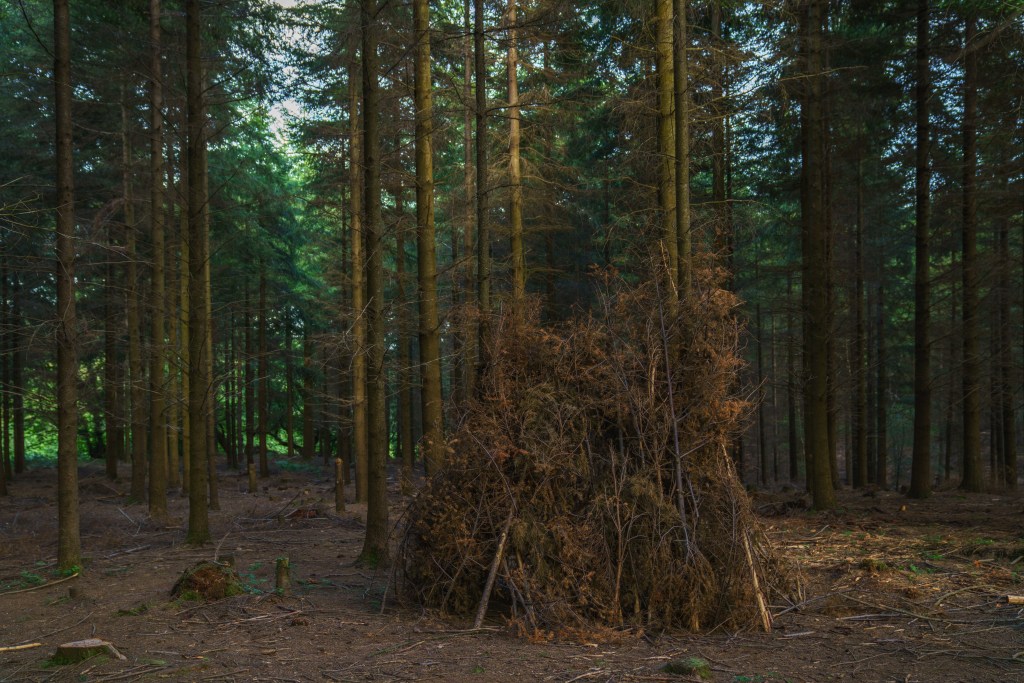
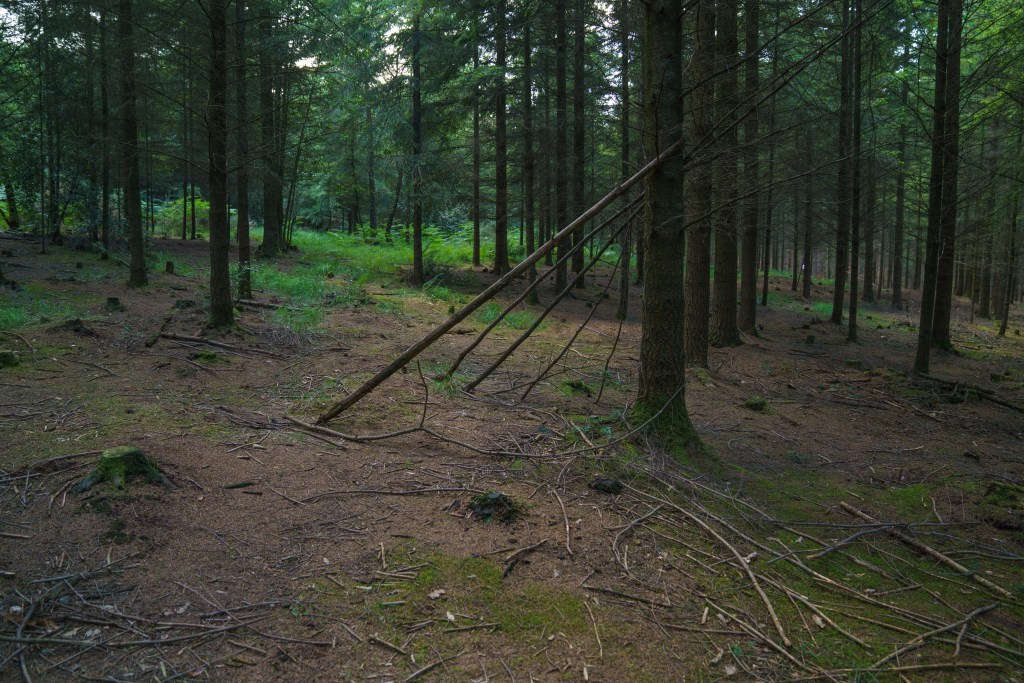
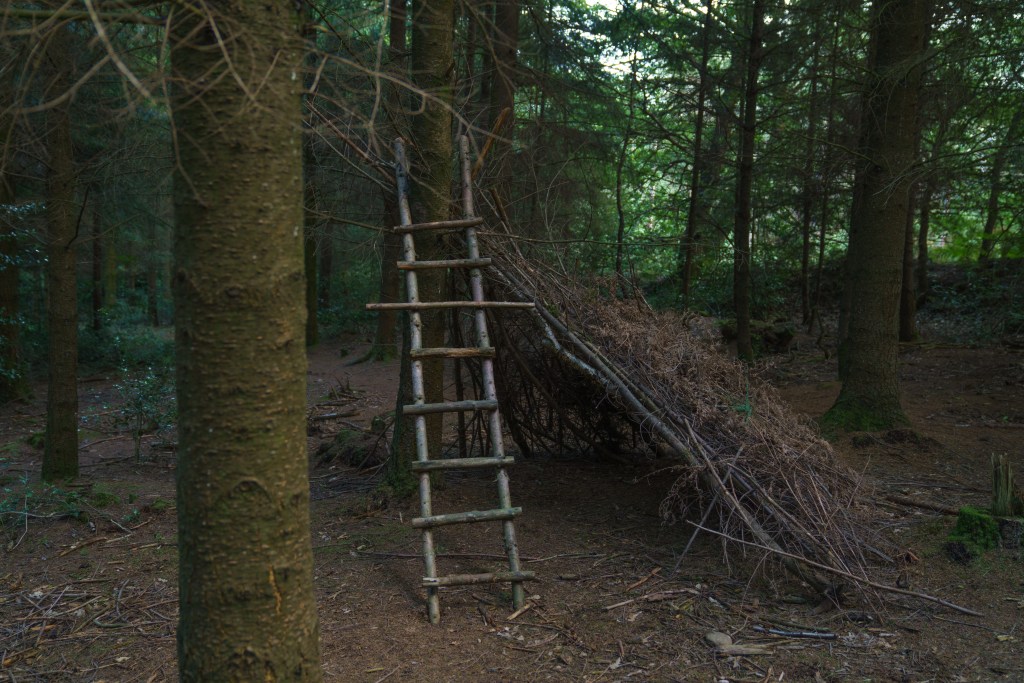
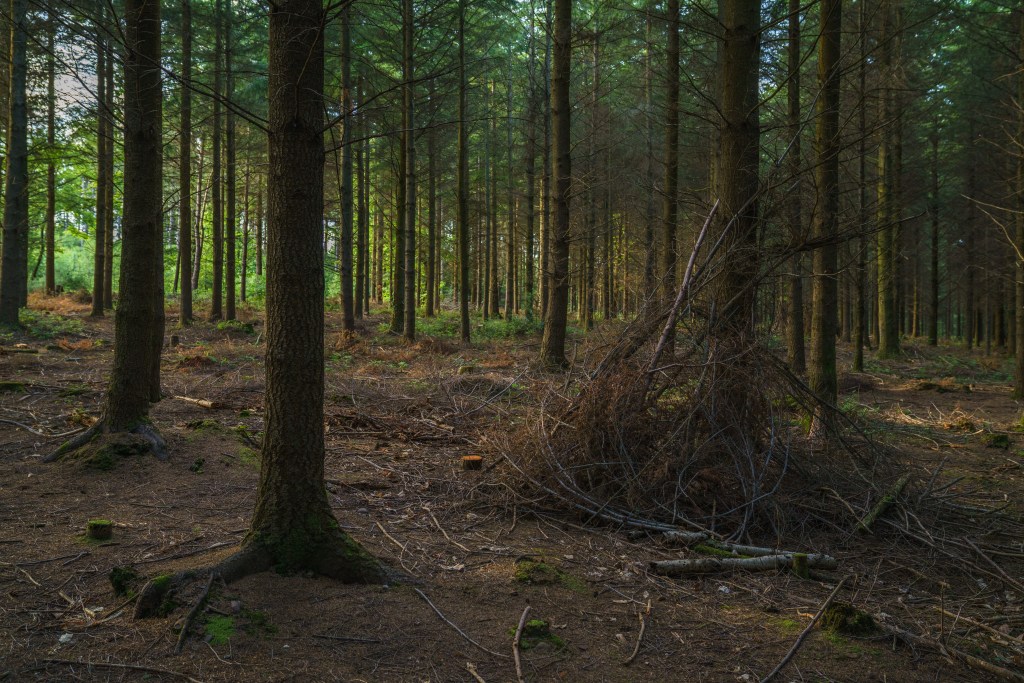
The timing of reading Tuan’s work is fortuitous, as I’m focussing on a more determinedly subjective response to the Pebblebed Heaths during this module, in preparation for exploring the subjective responses of others. Previously, I had let myself be open to and informed by the Heaths, when photographing, in social encounters, and through research. Now, however, I’m more interested in my own responses and, particularly, how I am constituting places and choosing places according to my own needs. I have mentioned previously my turn to the melancholy, but I believe the environments I seek out also provide psychological benefits; there is something reassuring in being enclosed by trees in some of the dense woodland, just as the emptiness of the plantations at the end of the day provides not just solitude but a privacy not possible on the heaths. I am aware of such places as being pre-made as such – enclosure banks, naming on maps, the prevalence of dens and trail adaptations – but I am also drawing on this material to constitute the place for myself, after my own fashion.
What constitutes Uphams Plantation, for instance, as ‘place’ is quite different for me as for the mountain biker, the forester, the young family, the conservationist. Indeed, I’m increasingly finding myself subdividing the placeof the heaths in smaller and smaller places, with affect being the foundation of these. I suspect those groups previously mentioned will also be doing so, but for the mountain-biker, the trail is a place, for the conservationist, so is the Dartford Warbler habitat; Tilley and Cameron-Daum’s anthropological study of the heaths (2017) included map-making from different users, from model aircraft flyers to Marines, demonstrates the diversity of such placemaking, even amongst the same user groups.
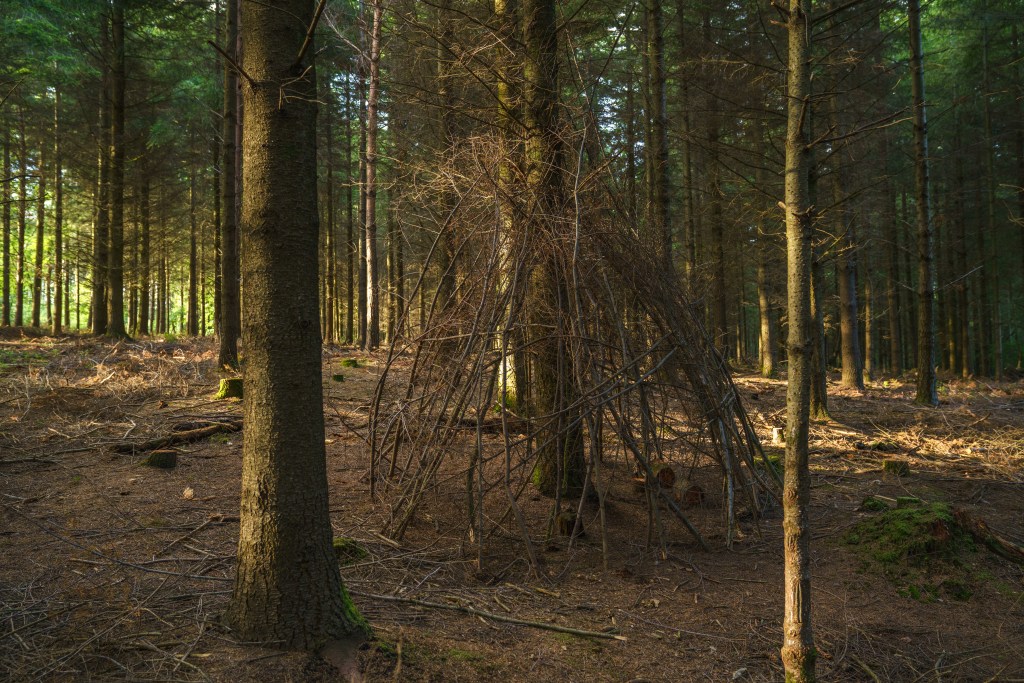
As the heaths’ role in my personal life has been its support for my mental wellbeing – it was the place I knew I must visit first when recovering from nervous exhaustion – it makes sense that my own map, constituted by placemaking according to my own needs, should be the focus of a more subjective engagement with this considerable and varied tract of land. Conversely, it also helps account for the difficulty I have in capturing affect in areas to which I find it less easy to develop intimacy.
Massey, D. 2005. For Space. London: SAGE Publications.
Tilley, C., & Cameron-Daum, K. 2017. An Anthropology of Landscape. London: UCL Press.
Tuan, Y. 1977. Space and Place: The Perspective of Experience. Minneapolis: University of Minnesota Press.
 out of the picture