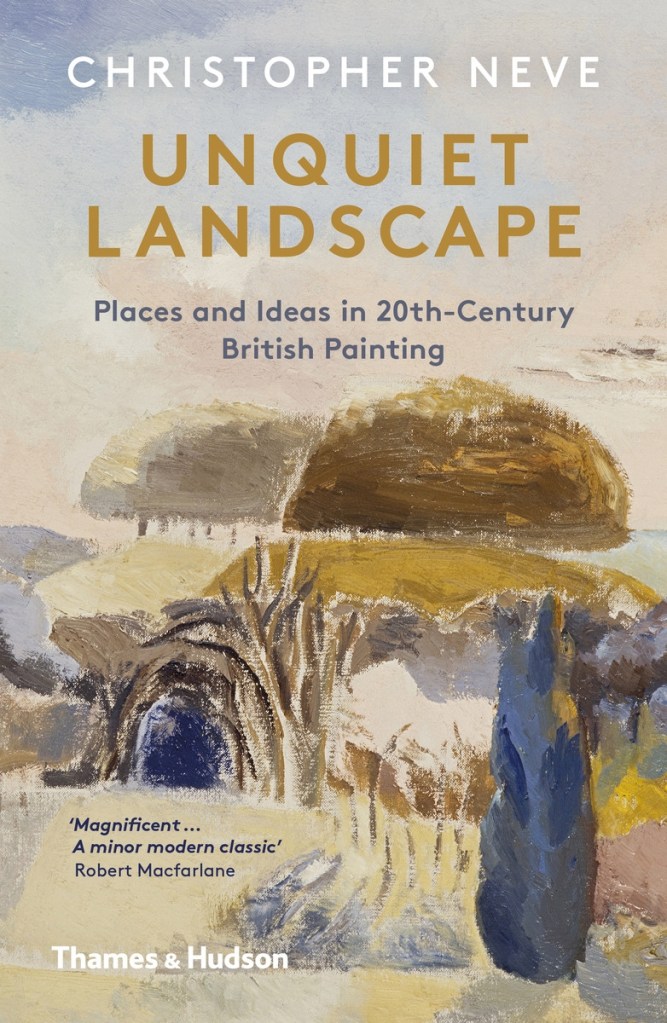
I read this book at the height of lockdown, recommended by a landscape photographer. This was a time when I ached for landscape to connect with, having briefly lost my own landscapes, both present and past, and so sought the landscapes available on foot from home. It’s a book about individual connections with landscape by mid-20th century British landscape painters, some very well-known like Paul Nash and Eric Ravilious, and some less celebrated. And it’s also a deeply philosophical and personal statement by Neve, a gallery owner who knew all the artists personally, concerning how artists in particular connect with landscapes, why they do it, and what effect this liberates.
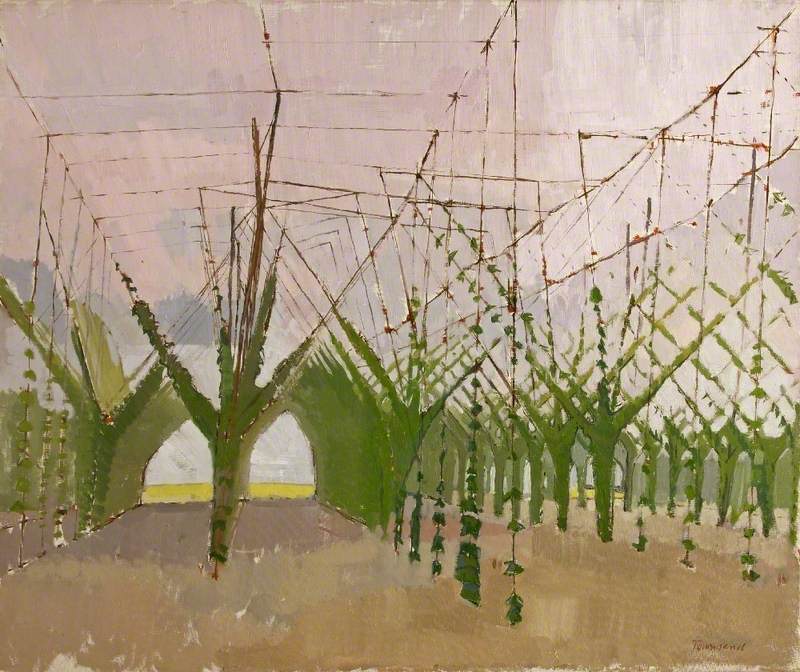
Neve advocates for an engaged but dispassionate – he uses the word ‘objective’, though not in the strictly scientific sense – observation, unclouded by sentiment or imposition, which allows for a set of feelings to arise which liberates an imaginative engagement. The painting arises from that engagement. Speaking of William Townsend, Neve says
‘Knowing how to see, how to approach the whole business of seeing, without prejudice or self-consciousness, can be the very basis on which to feel… Accurate observation arouses the imagination. To have these feelings, you do not observe countryside in a general way; you study it’. (136).
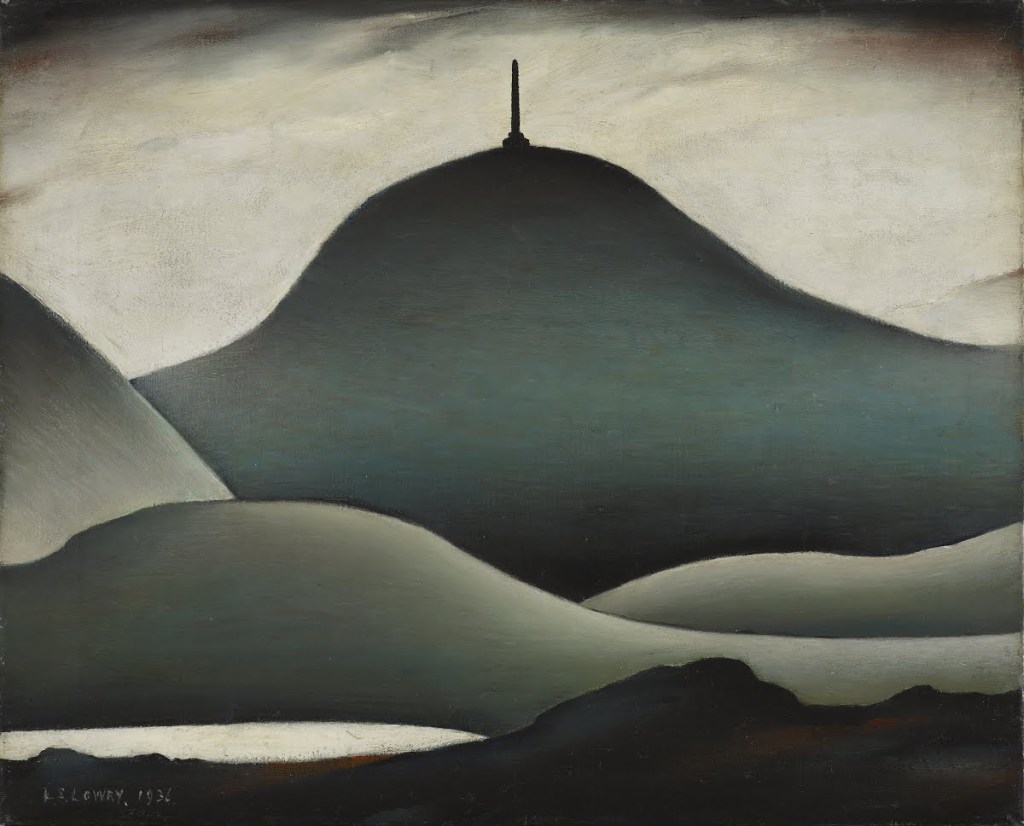
Each artist is motivated in doing so by their circumstances, personal histories and temperaments, and the feelings which arise are where self becomes entangled with landscape, is acted on by it. Speaking of L. S. Lowry, Neve comments…
‘You can always tell when a painter is in the business of artifice, of setting scenes instead of showing you what he really feels… To draw dramatic scenery as though it carries some meaning of its own is one thing: to sense its connection with your own terror of loneliness is another.’ (139-140).
In Eric Ravilious, he identifies a playful sense of geometry indistinguishable from his work in graphic design and textiles; in Stanley Spencer, a non-discriminating, ‘act of love’ through intense scrutiny which draws on a profound Christian faith; in Joan Eardley an elemental and pared-back solitude. To Neve, landscape has no specific ‘meaning’, but it finds expression by acting on the artist so long as they let it do so by stepping back and letting it work through them in such a way that the viewer may also engage with it – and through – the artist’s interpretation, in which we may find reflections of our own preferences and needs.
Here is not the place to discuss how this reflects my research into cultural geographers such as Wylie, Ingold and Massey, and anthropologist Tilley – doing this justice would run into many thousands of words – but it is enough for me to say that I see here the sense of entanglement and dwelling in the landscape which they refer to. I also see here reflected my previous experiences of artistic connections with landscapes. What is different here is that Neve is talking about a long-term, often life-long commitment to a landscape, something not really possible on five shoots spread out over months. And this is why it’s so timely, as Covid-19 has forced me into a position where I’m becoming as deeply immersed in a particular landscape – the Pebblebed Heaths – as are the ticks which I sometimes bring home.
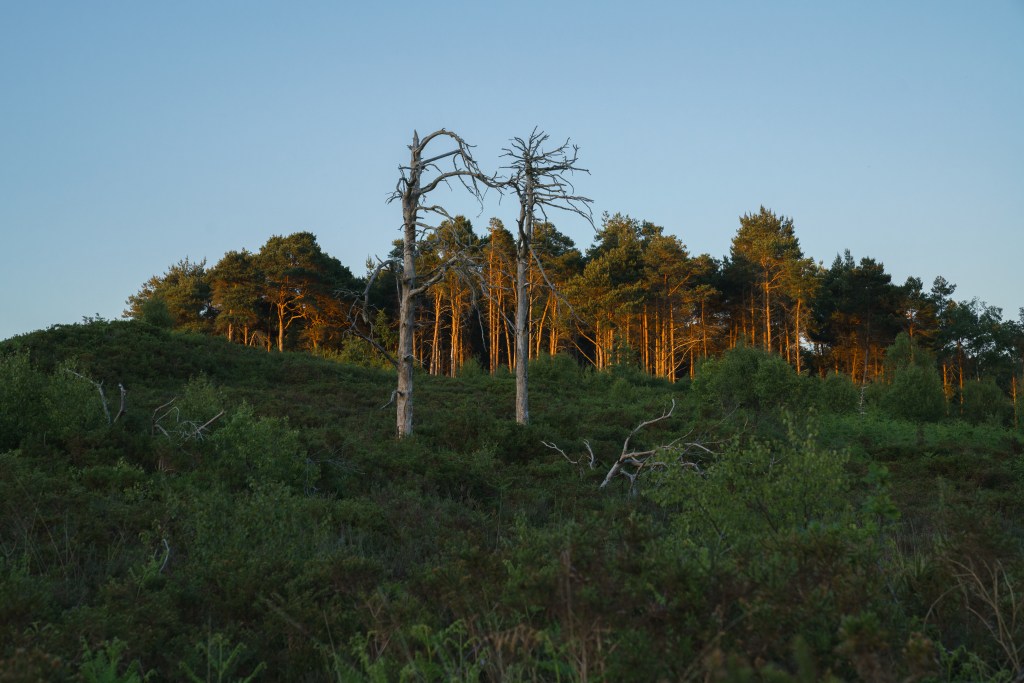
It’s also timely because, on the new module, Surfaces and Strategies, I’m more interested in a subjective, sensory, imaginative encounter with landscape, my own and those of others, and that’s why I’m increasingly asking myself the question: what does this landscape draw from me other than my interest? What am I drawn to and why? I’ve mentioned previously that I’m drawn to the weird and the eerie in landscape, and this is in no small measure because I’ve an active imagination and I love sci-fi and horror, but that doesn’t sufficiently explain why it’s the strange corners and valleys that interest me the most, the ruins and damage. I believe it’s a result of an unhappy and lonely childhood spent escaping into books; my encounter with landscape has always been exactly that kind of escape, a desire to find that same release and sense of possibility in the physical world ‘out there’, the affirmation that provides, and a space in which difficult feelings can find resolution.

I’ve begun to speak of walking on the heaths at the end of the day as a ‘reverie’ and I think that’s more or less the kind of dispassionate observation Neve refers to. It’s certainly informed by an attention to detail and knowledge; it’s vital for me to understand why the landscape looks as it does, politically, historically, ecologically, culturally, but that, I now see, assists the reverie. I can know that the churring of the nightjars I hear is exactly what it is, but I can also enter into the otherworldly feelings those inspire in me and create work through imaginative engagement. During Informing Contexts, I asked ‘What are the Pebblebed Heaths?’ During Surfaces and Strategies, I’m asking ‘What are the Pebblebed Heaths to me?’
Neve, C. 2019. Unquiet Landscape: Places and Ideas in 20th-Century British Painting (2nd edition). London: Thames and Hudson.
 out of the picture