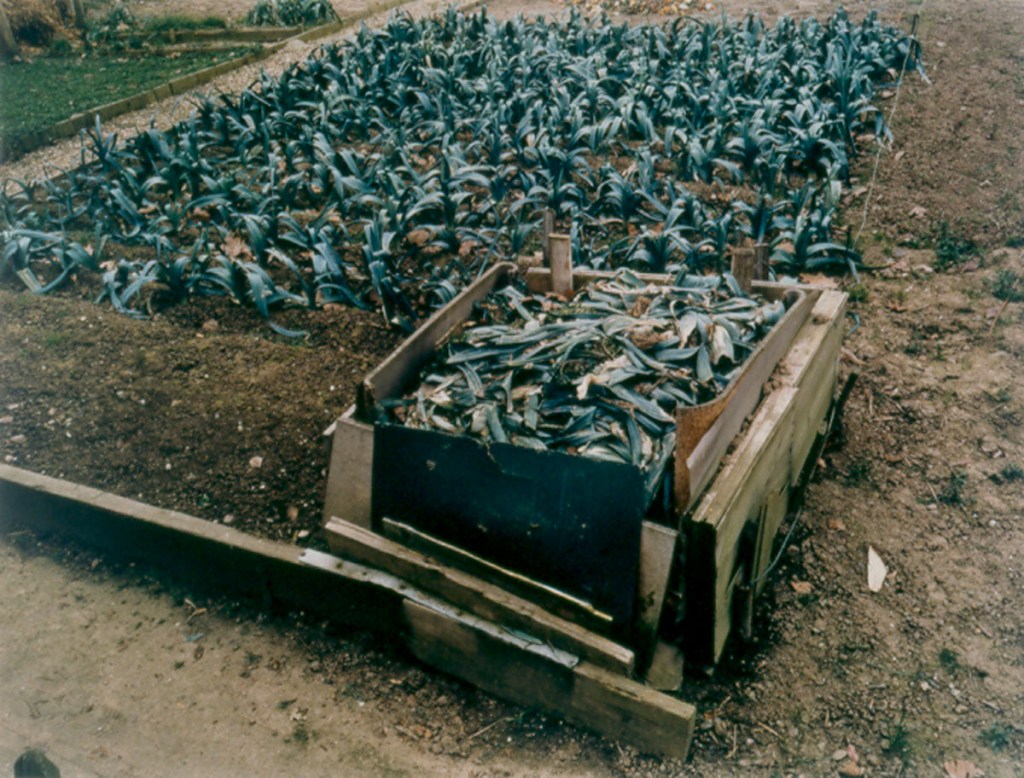
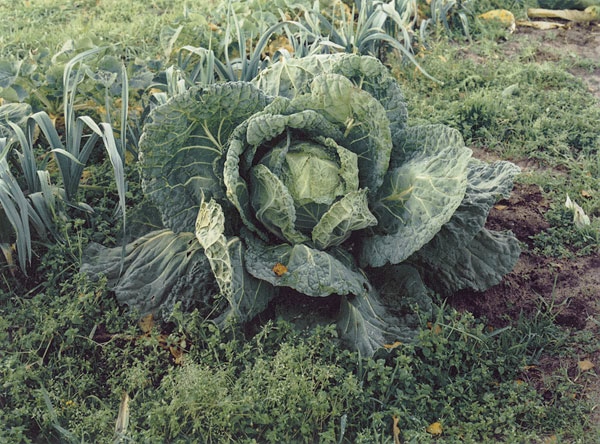
Simone Nieweg is a photographer I can really learn from. This collection, shot between 1987 and 2001, explores very specific German agricultural landscapes. That she’s a Becher student is evident in her patient recording of typologies under typically Becher-ish overcast lighting conditions. The collection, like those of the Bechers, becomes hypnotic through repetition. Endlessly unremarkable vegetable plots. Squashed horizons. Cabbages and sprouts and leeks. As with the Bechers, after a while, the repetition begins to abstract its subject, and the plots becomes geometric patterns of texture and colours – and under the light and the palette Nieweg uses, the distinctions between textures and colours is very subtle, drawing you in to look harder.
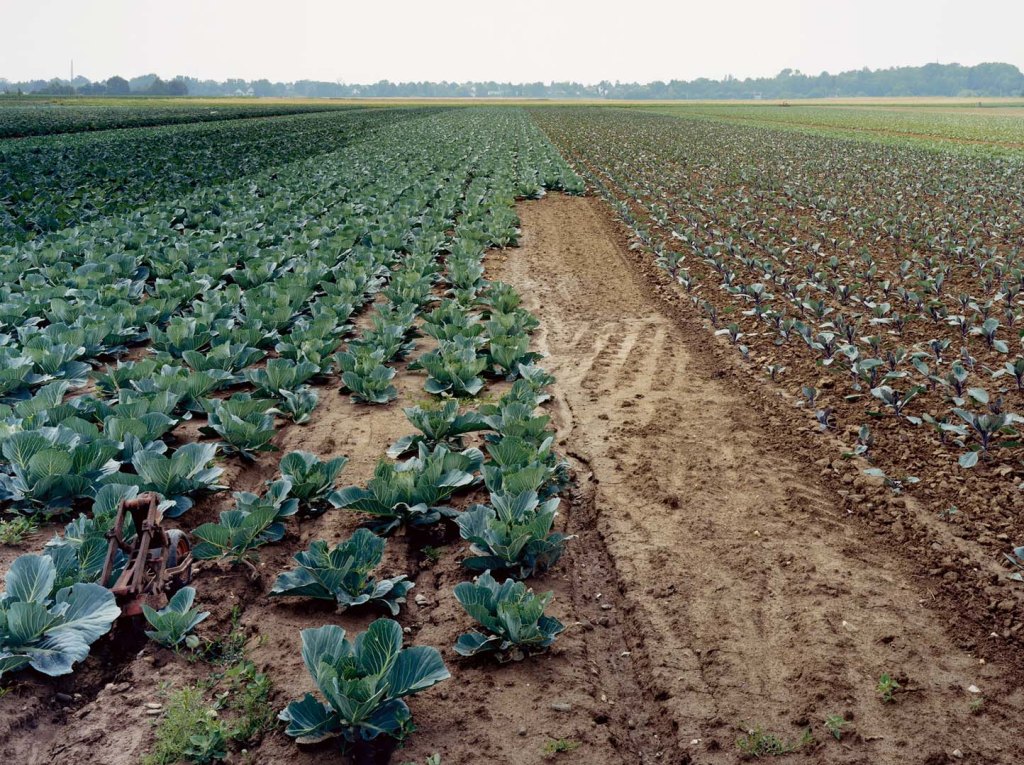
It’s an exquisitely beautiful experience, strangely reminiscent of Rothko. Nieweg has a fascination with line that I share with her, and she knows how to draw it out and assemble it from both organic and non-organic elements. Lines move this way and that, there are sharp corners and though there is often so little to look at, the eye is drawn through and around the scene no less compellingly than if this were a Hokusai.
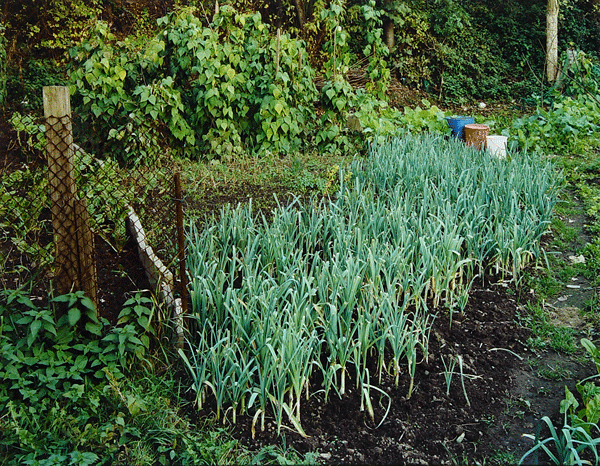
And yet, for all this abstraction, this is neither a-political, nor does it efface photography’s documentary facility. Human intrusion into the vegetable world is shown as abrupt and all-present, as if the yellow grass and battered brassica have been beaten into submission. The industrial scale of agriculture is laid bare, squashing human habitation into distant horizons, the emptiness of most scenes suggesting people have invaded, wreaked their violence on the soil, and then retreated from the battlefield of churned up mud. This is the countryside, but it’s a man-made countryside, anything growing, doing so permissively, submissively.
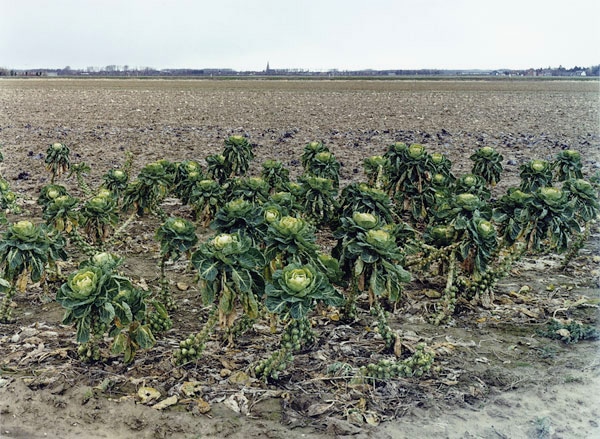
That the book is so beautiful, punctuated occasionally and ecstatically with sunlight on fences or a truly glorious swede, prevents the message from being overbearing or didactic, but it’s unavoidable. It’s almost too rich to consume in one sitting.
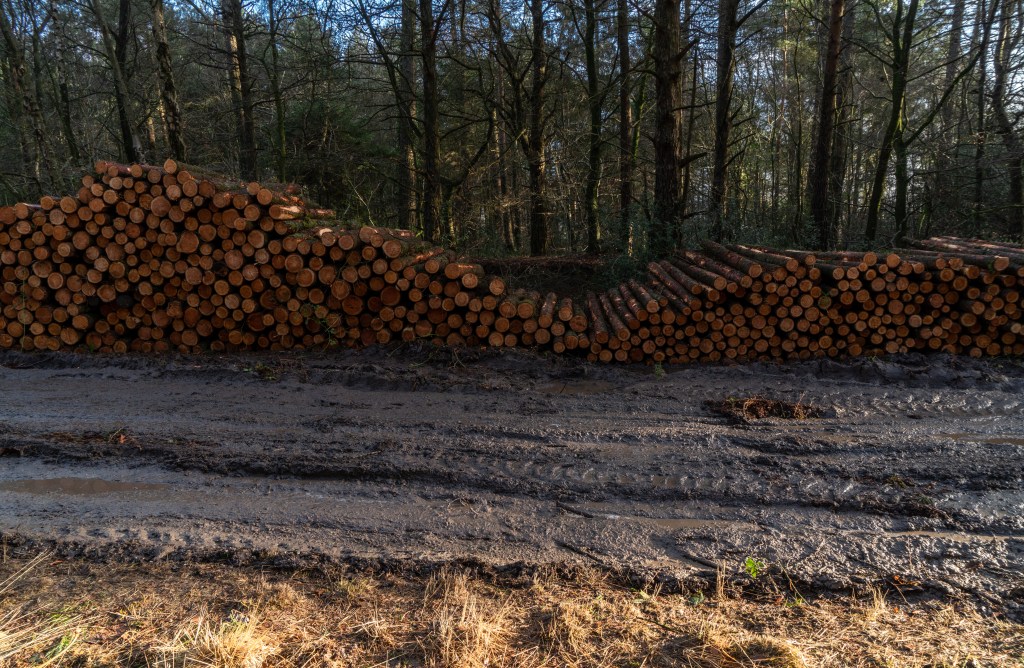
I have found a key influence here. I need to understand the geometries available to me through heathland paths, birch scrub, log piles, pool reflections and pine copses, and how these can be harnessed with human artefacts to develop the commons beyond being simply attractive. This will let me politicise my aesthetics.
Nieweg, Simone. 2002. Landschaften und Gartenstücke. Berlin: Schirmer/ Mosel.
 out of the picture