This book is a masterpiece of mood and narrative. Chris Killip is new to me, however celebrated he might be within the world of photography. This selection of photos were taken over a ten year period across Ireland. A third are in black and white, Killip’s style dips into documentary shots of events such as pilgrimage and sea bathing, abstracts, landscapes, domestic details, some are shot from car windows. And yet, and without any accompanying text, they form an emotional and narrative unity. There is much, much for me to learn here, about suggestion, narrative, mood, continuity and discontinuity. One format is continually adhered to: the left hand page is always a single black and white shot of a pilgrimage into the mountains, with the pilgrims almost uniformly dominating the frame, which the right hand page is aways colour, though between one and four images. The effect is of following a single pilgrimage – without accompanying detail, it might just as well be a single pilgrimage though it is in fact two – up and down the mountain. This provides a narrative arc, perhaps the most primordial of all narrative arcs.
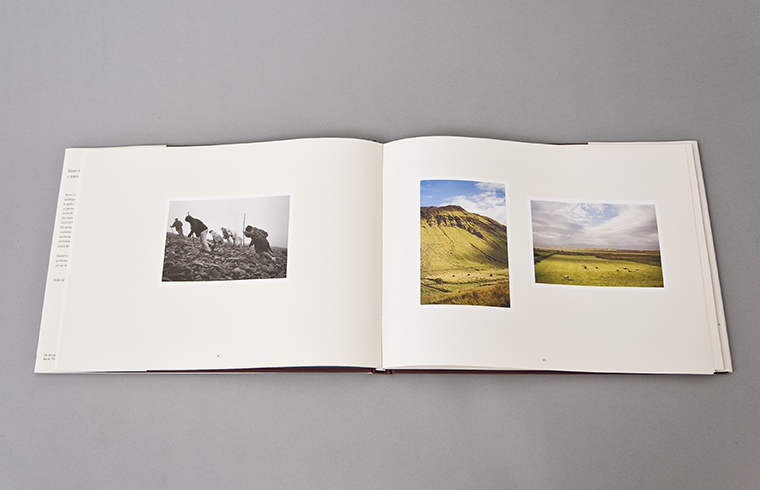
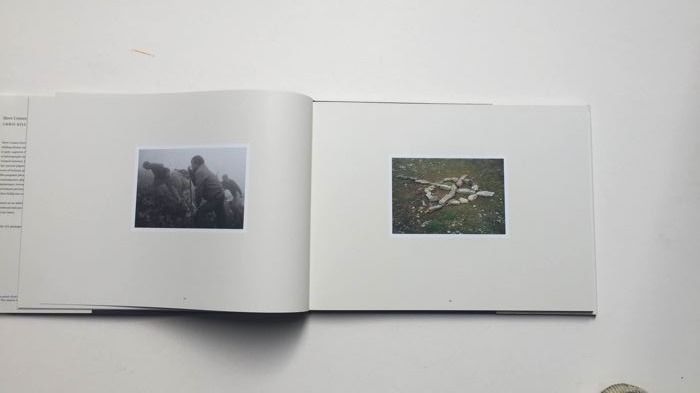
The colour shots are brought into dialogue with each shot – sometimes through explicit visual referencing such as a winding road, or thematic, such as a particularly arduous moment of the pilgrimage with a stone hand-constructed cross, suggesting penitence. Sometimes both sides show pilgrimage, providing a paradoxical sense of changing times and continuity.
At other times, the connection isn’t explicit, but so carefully sequenced around other images that one feels as if it must be connected and so forges the connection oneself – an old man paired with a thatched roof decaying implies the inevitability of time passing and thus death, linking the teenagers in black and white and as misbehaving sea-bathers suggests a universality of experience that embraces contradiction and subversion.
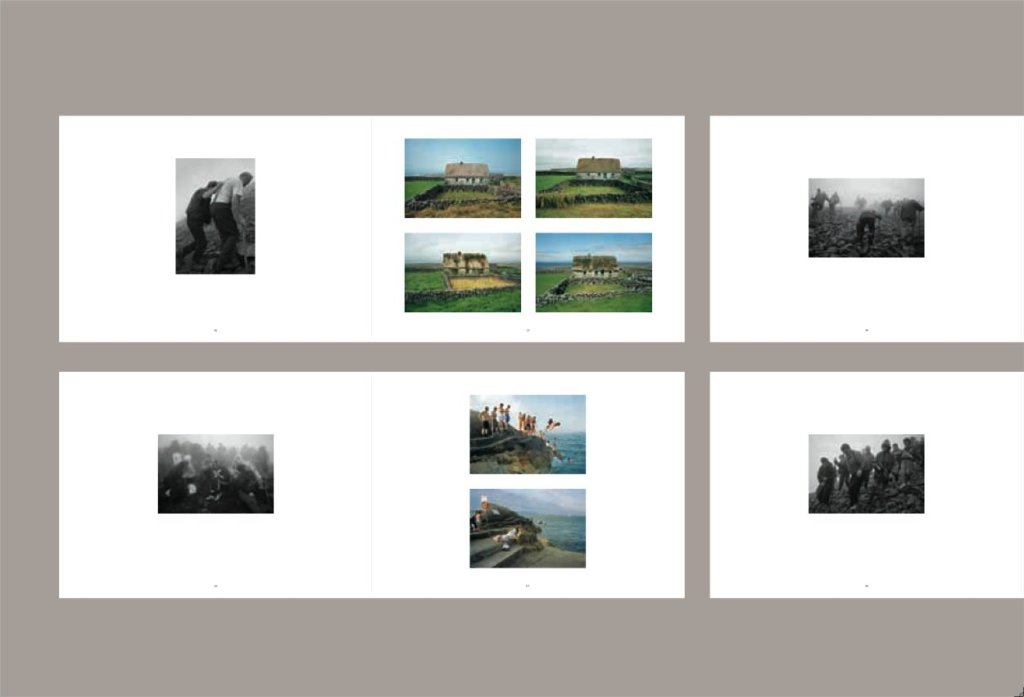
Particularly important for me is that, when Killip pairs with semi-abstracts with a botanical or geographical subject, a powerful sensory impression is delivered: the textures of scree suggest the sound and difficulty of walking over it illustrated in black and white, a young adult in prayer paired with a colourful, sunlit tree suggests peacefulnes, pilgrims on steep inclines paired on two double spreads with blocked field entrances suggests difficulty and determination. What I can begin to learn from here – and what I can now begin to transfer as knowledge from editing film – is how photographs can together create meanings that individually they cannot. I am accustomed to thinking of photographs as singular worlds. Killip has shown me that fresh and powerful meanings are possible when thinking of them in combination.
Killip, C. 2009. Here Comes Everybody: Chris Killip’s Irish Photographs. London: Thames & Hudson.
 out of the picture