I’ve been keen to see both these photobooks for a while as each is expressing something specific, and quite different, about place: Morris’ personal, bittersweet documenting of contemporary Wales, Sternfeld’s exploration of sites of a range of violence, including land theft, industrial negligence, spree shooting, abduction, assassination, police brutality and rape.
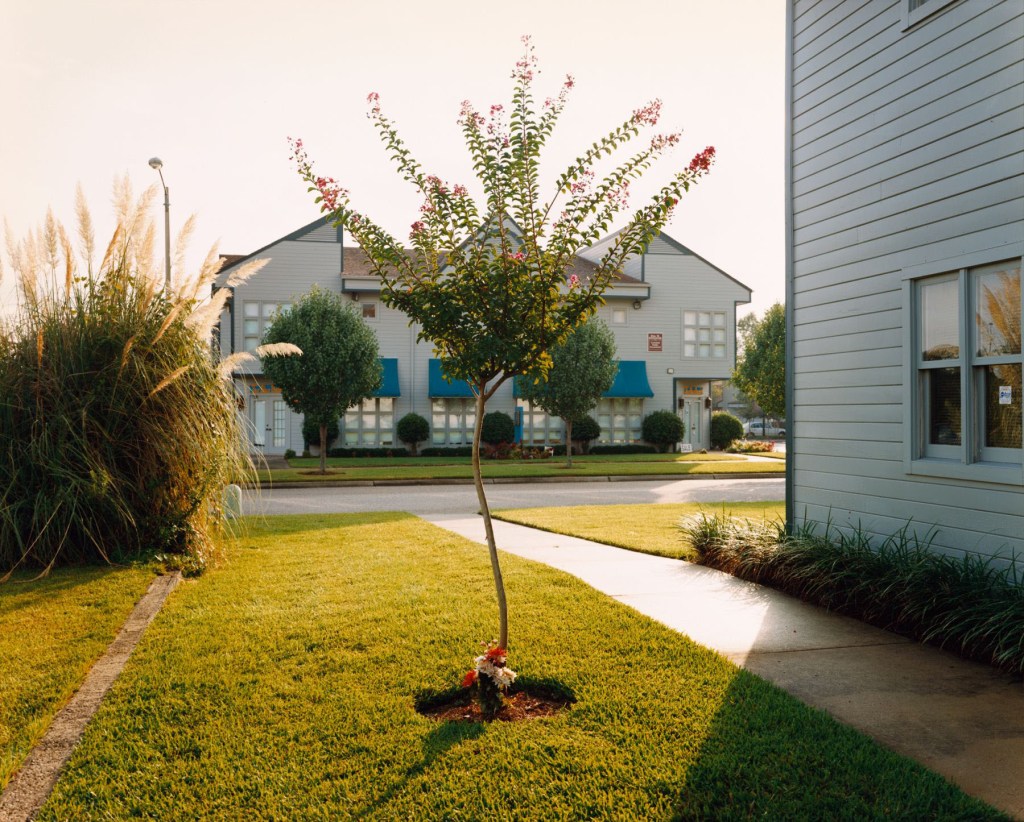
Sternfeld is a photographer working in a manner more akin to my inclinations. This is not a peopled landscape and Sternfeld uses a variety of framing strategies. His images are composed with a keen eye for line and leading the viewer through the image, often abruptly throwing the eye across the frame and out the other side, at other times drawing the eye into the frame through perspectival lines. Some objects – a bus stop, a decaying store, a pile of rubble – are centred and the image largely flat. Specific motifs recurr – gates, snow (sometimes very deftly used) and golden light. Sternfeld often uses long exposure times, blurring water, trees, a bird, and distant people, and this provides a gently surreal touch without calling too much attention to self-reflexivity. The images by themselves are quiet, suggestive and often beautiful.
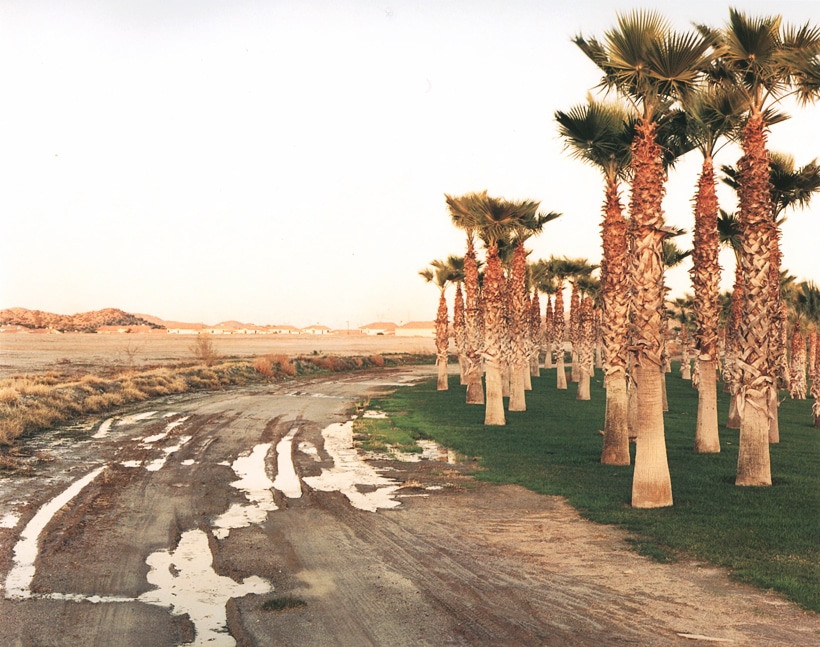
The role of text is indispensible. Sternfelds language is plain and unemotive, though not cold, and a dialogue between image and text emerges, each re-enforcing and developing the other. The use of space and the lack of people allows space for the viewer to pause and imagine for themselves, while the strong use of coherent style communicates Sternfeld’s role as witness – and fellow traveller, fellow imaginer. The strong contextual details – time of day, season – give a sense of the place as a living place, not simply a stage. This abstracts the event – even where there is evidence of it such as memorials, the collective effect of the empty places bleeds through. The series is chronological, with events largely taken from the 10 years prior to the 1996 publication date. I believe I have much to learn from this work.
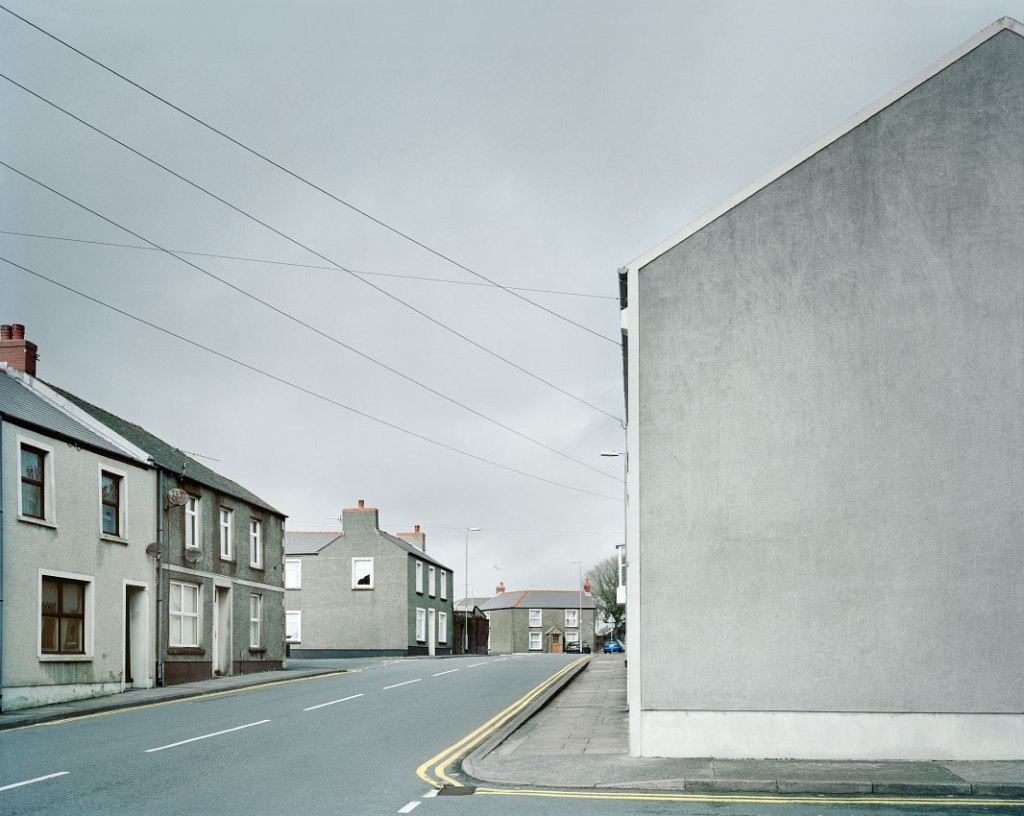
I had previously only seen large format photographs from Morris’ book, which reminded me of the work of John Davies. The large format photographs form a coherent group here, and are glorious. However, I felt the range of styles was too wide, and in particular I didn’t find Morris’ more documentary images, many of the Welsh seaside, to communicate much, nor to be aesthetically interesting. This is perhaps simply a matter of personal preference, but having loved the documentary seaside work of Tony Ray-Jones and Marketa Luskakova, I’m not so sure. Morris does not somehow seem to establish a coherent style as does Sternfeld, something I’m addressing in my own work, although where there is consistency, such as the large format views or – particularly – the street views, which sometimes flirt with abstractions – these are a joy.
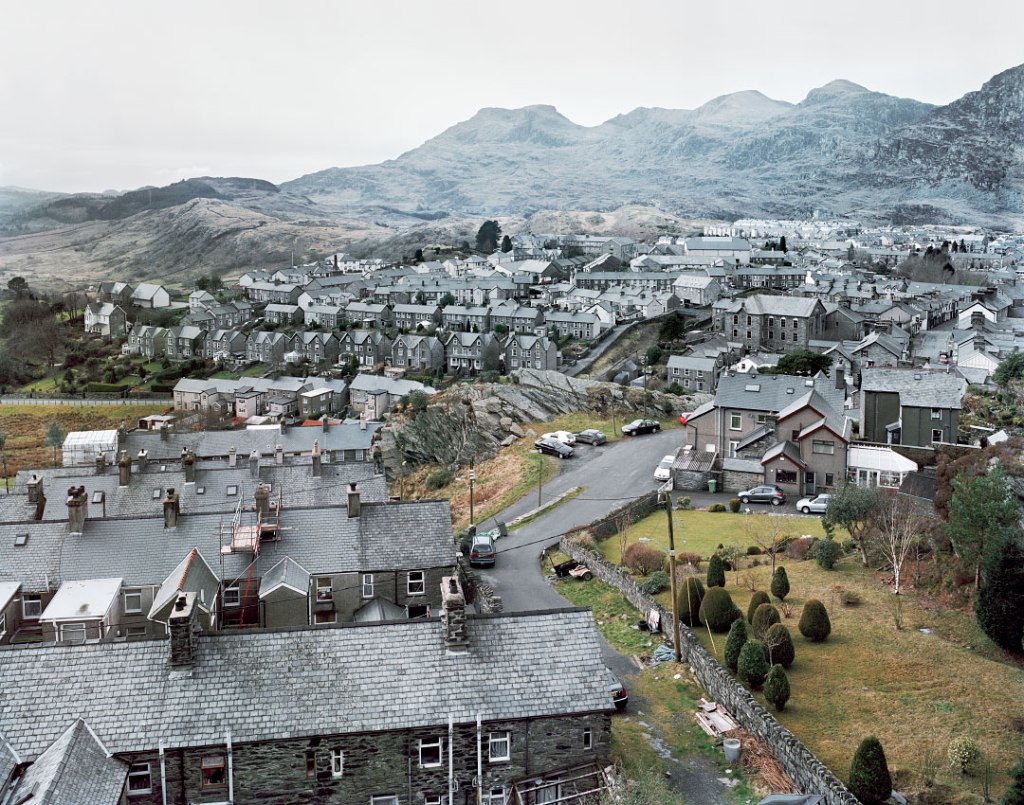
The sequencing is interesting, however, and I think something I can learn from. Morris makes thematic links running between double spreads, leading the viewer through Wales, so it feels, and dividing the experience unobtrusively into segments through the occasional use of a blank white page. Many of the double spread pairings are inspired – particularly that of Popton Refinery and Caerfilli Castle, both structures filling an identically sized band of structure in the middle of each shot, each separated from the viewer by infrastructure such as gates and lights. Indeed, this pairing could be said to sum up the Wales that Morris is trying to demonstrate – contextualising heritage and industry amongst contemporary crass banality, celebrating the persistence of culture while critiquing myth-making.
Morris, J. 2010. A Landscape of Wales. Stockport: Dewi Lewis Publishing.
Sternfeld, J. 1996. On This Site. San Francisco: Chronicle Books.
 out of the picture