I love going to the Martin Parr Foundation even more now I’ve found the river walk to get there, with all its industrial sites, graffiti, bridges and trees. The Japanese knotweed is particularly splendid this autumn.
I looked out several books I’d wanted to find based on recommendations and Jesse Alexander’s Perspecitves on Place (2015). First up was Mark Power’s Superstructure (2000), which documents the construction of the Millennium Dome, now the O2 Arena.
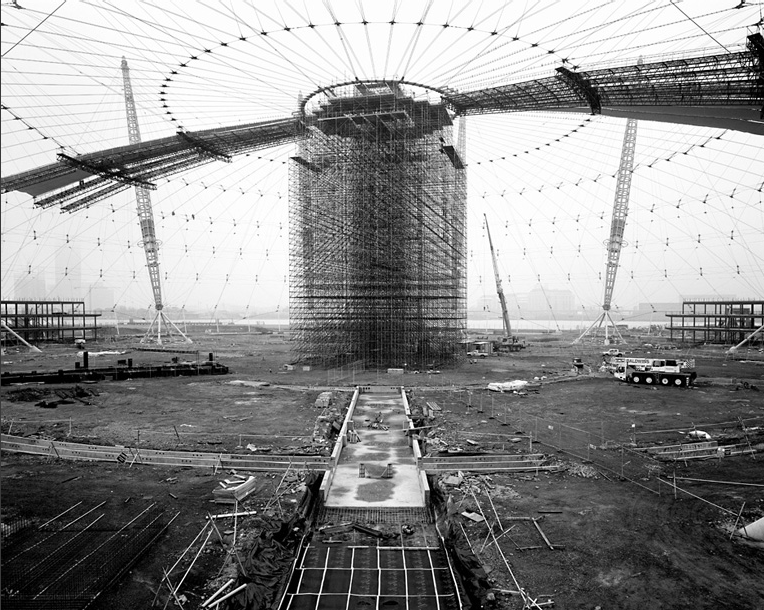
I’m undecided about Mark Power, as sometimes he comes across like a more showy Stephen Shore, but some of his stuff I love. This is a magnificent book, not simply because it takes you into the heart of something you wouldn’t have seen otherwise – the early stages of construction are epic. I loved his sense of the absurd – workers in the newly openned McDonalds’, the off limits human body exhibit – but more how he intersperses the epic with the micro details of the work – racks of mugs, wood shavings.
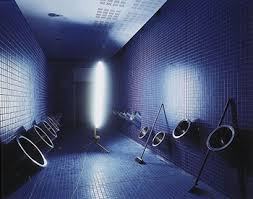
It’s strange having few people throughout, in what must have been a very busy site. It makes it seem oddly quiet, which it wouldn’t have been, and that adds to the epic, cathedral feel of the images. Activity is filled in with the details, and where workers appear, they also seem like details – blurred, backs towards the camera, just their feet overhead. Not focussing on people keeps the attention on the structure, rather than the human stories involved in its making. The time scale is that of the building, with occasional contextualising historic details like brand names, papers and TV shows. Time is moving on, though – the ruins and rubbish of the area at the start, the trees lines up and awaiting planting. Only 1 image exists after the openning, distant, blurred, almost as if the whole thing was pointless and the construction was the main event. Given the problems of the dome in the following years, that assumption is accurate.
I looked through several of Jem Southam’s books. Red River (1989) is a river that flows in West Cornwall, and it’s scenery I know, like much of Southam’s. Very well, in the case of his Exe Valley work. Red River, created with poet DM Thomas, doesn’t aim for smoothness, and he draws on numerous styles, abstracts, animal shots, puns. Like Power, he shows community and place largely without portraits. The portraits do seem like interruptions, like speech in a speechless film. I like his contrasts – garden flowers and grotty farmyards and John Davies-ish industrial shots. I liked Rockfalls, Rivermouths and Ponds (1999) much better.
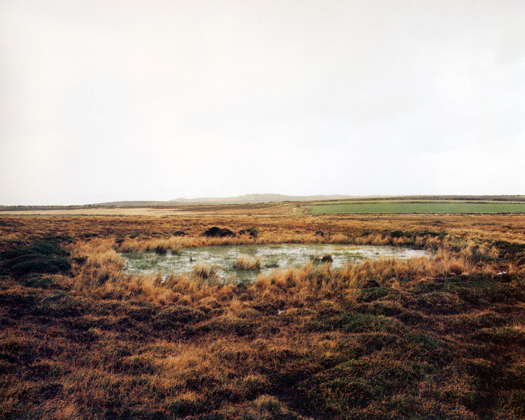
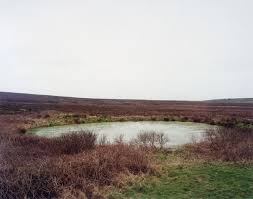
I can see what I’d been told about with typologies here – putting them together connects and creates a distinct effect. I wonder if the typologies of commons should be together, rather than the specific commons. There’s something particularly Becherish about the rivermouths and ponds. Southam seems largely to work in the early morning, before breakfast, again something I’d been told about and worth bearing in mind. Time is also really important – changing tides, seasons, and the cliff erosion – what Southam quotes as “creep” events – events on a really, really slow time scale. I should think about time in my project.
Isaac recommended I look at John Gossage’s The Pond (1985). This is great. He said you’re not really sure if it’s the same place or not in the book, but it feels as if it should be. Gossage has a fascination with paths, traces and borders as do I.

The landscape here is vague, unspecial, it’s an unofficial countryside, to quote Mabey (2010), and the aim is like an exploration and an evocation rather than a document.
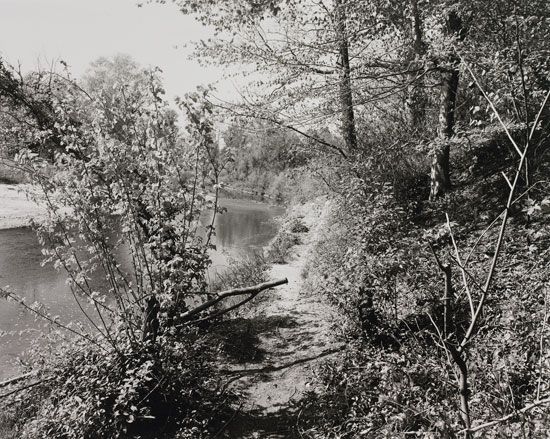
The photography isn’t technically accomplished. It’s not smooth. But that fits the subject and there are fascinating effects used with depth of field, something I should consider. There’s a real sense of looking around, at the ground, through trees, overhead. He does some similar stuff with There & the Gone (1997), but that feels more strained.
Isaac also recommended I look at Baltz. Park City (1981)is like a scruffy John Adams, much less beautiful and poised. More texture than line. Again, like Powers, busy building sites with absent activity. I loved Baltz’ use of typologies – waste heaps, unwired sockets, fireplaces, wood shavings.
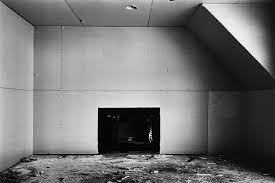
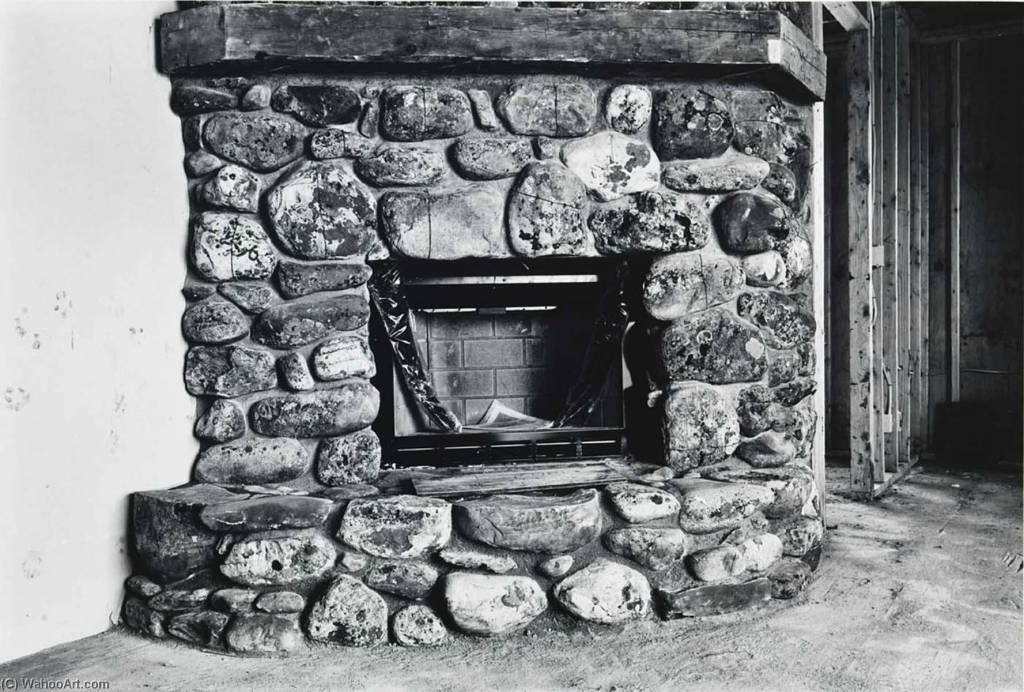
There’s a sense of time moving with dust and fire, but also stillness. It’s unnerving, though less so than San Quentin Point (1986) which looks at litter as if it were found on the surface of the moon. I found this impenetrable and boring after a while, though I appreciate its defamiliarising effects which make the litter look genuinely horrifying rather than simply morally wrong.
Borderlines (2008) is a book of interviews about The Troubles with people living at the Irish border – particularly poignant, upsettingly so, given current events.
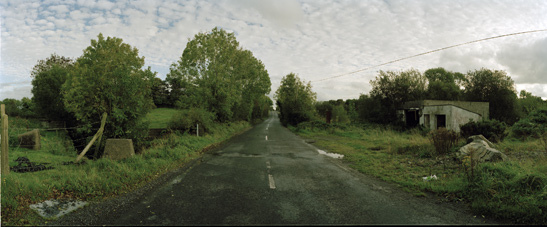
The book was created in the wake of the Good Friday Agreement and both sides saw joint EU membership as a means to peace. Sad. The photos aren’t all great, but there’s a casual focus on the banality and casualness of horror – murders at crossroads, a dead fox on a fence, a caged CCTV camera, as if the photos contain hidden codes and latent violence. It was hard to see how they fitted with the interviews, though.
Gilligan’s DIY/ Underground Skateparks (2014) depicts skateparks around the world, and while there’s an interest in seeing the variety and sameness of them all, the interest wanes fast – the portraits are horribly contrived – and it felt like he needed to work harder somehow. The shots are too dissimilar – especially a few stunning ones in Germany – and a sudden leap to golden hour footage seemed amateurish.
Paul Hill’s White Peak Dark Peak (1990) is a stunner. He’s fascinated with lines in the landscape, especially faint ones like badger tracks, and something that only works well in black and white, as I’ve found for myself. He has an eye for the surreal and macabre – the wallaby in vignetter, a rotting badger through the year – and typologies – mushroom circles, tussocks, dead trees.
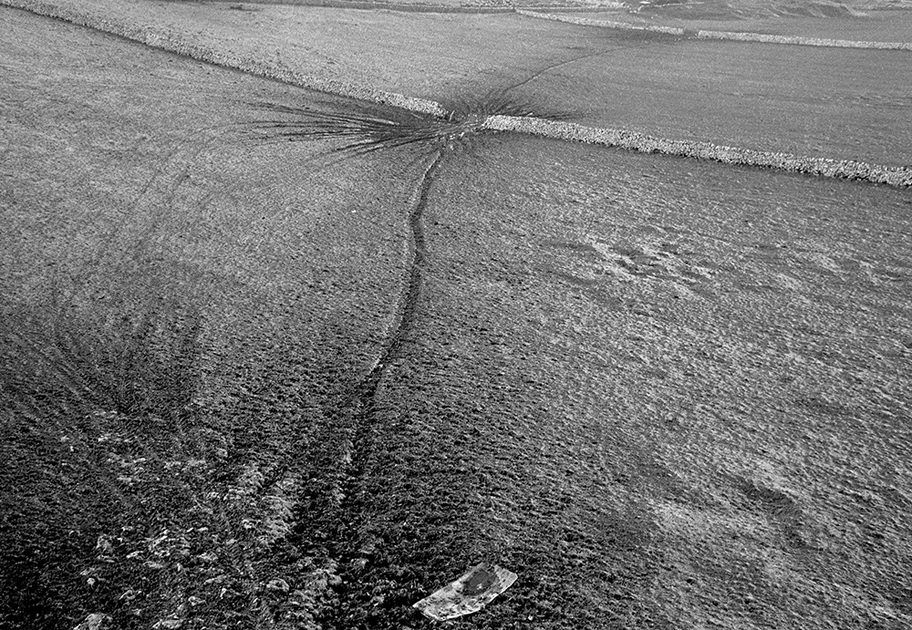
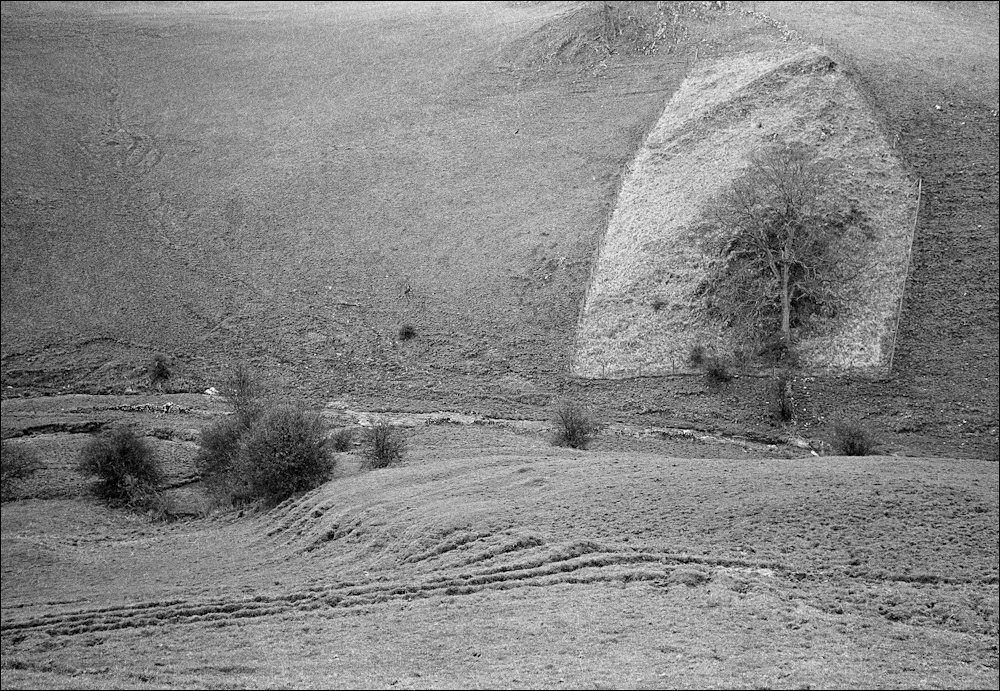
Shots are repeated almost identically, some as places, but others as positioning for flowers, for example. Oddly, the exactness and repetition between seasons makes the landscape seem unchanging.
Alexander, J. A. P. 2015. Perspectives on Place: Theory and Practice in Landscape Photography. London: Bloomsbury.
Baltz, L. 1981. Park City. NYC: Aperture.
Baltz, L. 1986. San Quentin Point. NYC: Aperture.
Brady, T. et al. 2008. Borderlines: Personal Stories and Experiences from the Border Counties of the Island of Ireland. Gallery of Photography. Dublin: Gallery of Photography.
Gilligan, R. 2014. DIY/ Underground Skateparks. NYC: Prestel.
Gossage, J. 1985. The Pond. NYC: Aperture.
Gossage, J. 1997. There & Gone. Munich: Nazraeli Press.
Hill, Paul. 1990. White Peak, Dark Peak. Manchester: Cornerstone Publications.
Mabey, R. 2010. The Unofficial Countryside. Stanbridge, Dorset: Little Toller Books.
Power, Mark. 2000. Superstructure. London: HarperCollins Illustrated.
Southam, J, & Thomas, D. M. 1989. Red River. Manchester: Cornerstone Publications.
Southam, J. 1999. Rockfalls, Rivermouths and Ponds. Brighton: Photoworks.
 out of the picture